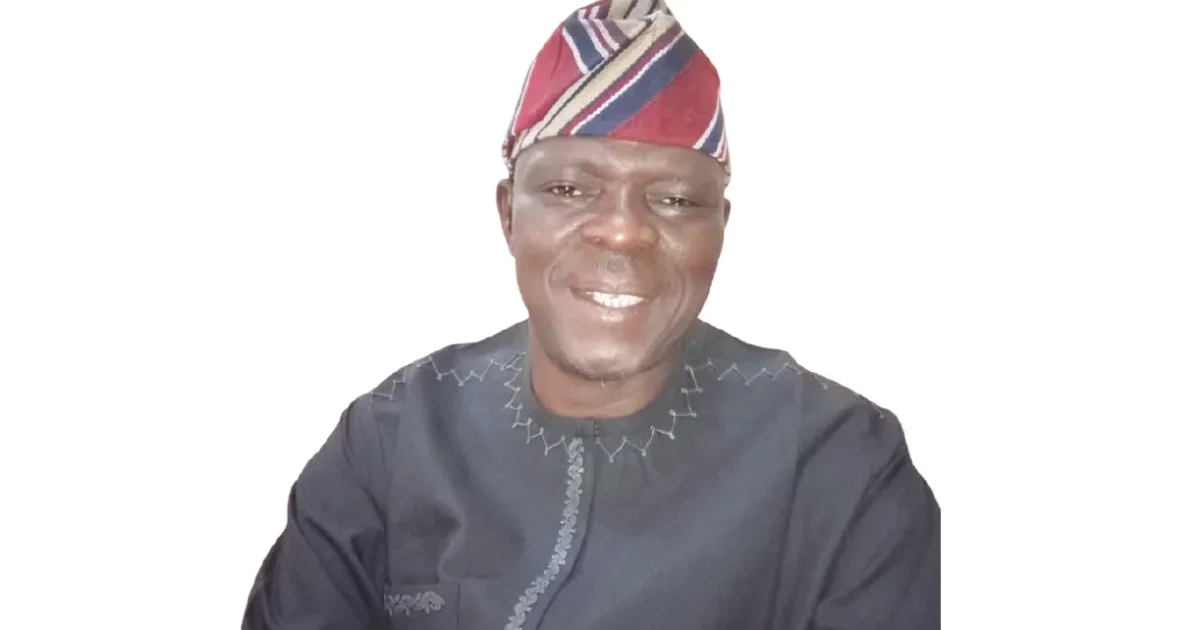
In this chat with DARE AKOGUN, Abubakar Issa, the North Central Zonal Legal Adviser of the Peoples Democratic Party, shares why the PDP skipped the G100 summit and talks about the party's plans for the 2027 elections.
Why did PDP choose not to join the G100 summit, which aims to unite opposition parties?
Our stance is clear. The PDP has some internal issues to sort out before thinking about any outside alliances. We cannot discuss teaming up with other parties when we haven’t fixed our own problems. Our first job is to make the PDP strong and inclusive. Once we achieve that, we can talk with other parties to see if we need an alliance.
What is PDP's view on the coalition?
The Constitution allows people to come together for a common goal. Section 40 protects the right to peaceful assembly and association. There’s nothing wrong with individuals forming a movement or pressure group. But it is a different matter when political parties join such a group.
Section 221 of the Constitution clearly states the role of political parties in elections. A pressure group is not the same as a political party. You can’t just merge the identity and duties of political parties into a pressure group and expect that to lead to a successful electoral result.
The key question is: How will this arrangement work within the constitutional and electoral framework?
For example, if the coalition decides to support one party to choose a presidential candidate, how will that happen? This is where the legal and political challenges arise. Each party has its own constitution, structure, delegates, and ways to select candidates. So, clarity is needed on how a coalition will work without breaking these rules.
There are two factions within PDP: one invited to the G100 summit and another recognized by INEC that supports the ‘National Rainbow Coalition’ for President Tinubu. Which one do you represent?
Legally, there is no officially recognized second PDP. Some members are protesting against the leadership and disagree with some decisions. Disagreement is normal in politics. You don’t always have to agree with everything your leaders do.
But just because some members disagree doesn’t mean they can create a new party. They can express their concerns and challenge decisions through the right party channels or seek legal help if needed. They can act as individuals, but they can’t take over the party's roles.
This point is important as we approach election season. Voters need to know who can speak for the party.
The truth is that PDP is not completely out of the coalition talks.
Some members are leaning towards the G100 talks, some are doubtful, while others think the party should focus on its own candidate first. That’s why I said it’s hard to say everyone in the PDP is moving the same way.
Still, there is a difference between an individual member participating in talks and the PDP as a party officially joining an alliance. The party hasn’t made a final decision on abandoning its presidential platform for another.
If the party eventually resolves its issues and decides an alliance is good for it, then it can negotiate with others. But that decision must follow the right party processes.
G100 says opposition parties must unite to defeat APC. Do you agree?
I agree that the opposition needs to come together to beat the ruling party. The economy is tough. Nigerians are dealing with hardships, insecurity, and high living costs. Many people are unhappy with government policies.
But we should remember what happened in 2023. Three major political groups split the opposition vote, and the APC won. If the opposition doesn’t manage itself well, we could face a similar outcome.
Today, APC has a strong structure nationwide. They have governors, lawmakers, and other political networks. The question is whether these structures will remain solid by the time the 2027 elections come. This is what the opposition should be looking out for.
So, coalition-building is important for the opposition. But figuring out how to build that coalition is the tricky part.
There is definitely a risk. With ADC, SDP, Accord, and other parties pursuing different paths, there could be many centers of opposition.
If the opposition ends up with several presidential candidates from the same voter pool, the APC could gain. This was a key lesson from 2023.
But we must also recognize that voters are not owned by political parties. Nigerians can choose to vote for a candidate regardless of party affiliation. The political situation in 2027 will depend on how people feel about the economy, insecurity, and unemployment.
If PDP stays out of G100, can the coalition beat APC without the party?
It would be tough to ignore the PDP since it is one of Nigeria’s major political parties. But it is also hard to say that only the PDP can create the force needed to defeat the APC.
Politics is about numbers, structures, candidates, resources, and voters' feelings. A coalition of several parties and influential figures could become a strong force.
But the coalition must be well organized. You can’t just gather parties and declare there will be one candidate without addressing the legal and political issues involved.
There are also questions about each party's interests, who will pick the candidate, how delegates will be chosen, how campaigns will be shared, and what happens to the coalition after the elections. These are not small matters.
Beyond just finding one presidential candidate, G100 is proposing a government of national competence. What do you think of that idea?
That idea raises big constitutional and political questions. If people want a four-year transition government, they must clarify the legal basis for it. The President is elected for a set term. You can’t just create a new political setup outside the Constitution and call it a transition government without considering the legal implications.
There’s also the question of the mandate given by voters. If a candidate is elected for a recognized term, what happens if that coalition decides in advance that the administration will only last four years?
These are issues that lawyers and political actors need to look at closely. The idea of a Government of National Competence might sound good, but being attractive does not mean it’s constitutional.
If G100 successfully picks a consensus presidential candidate, will PDP support that candidate or run independently?
It’s too soon to say because the PDP hasn’t made that decision yet. If G100 manages to choose a candidate, the PDP will need to assess the political reality at that time.
But the PDP’s current view is that it wants to be a strong political party first.
Then, it can think about whether an outside alliance is needed. Politics is about negotiation. Anything is possible. If PDP's interests align with another coalition, there could be a deal. If not, PDP might choose to run alone.
The key is that the decision must come from the right party channels and be in the party's best interest. The opposition should learn from 2023. If they can’t manage their differences, they might split the votes again and make it easier for the APC to win. But if they can get their act together, develop credible candidates, and offer a strong alternative, the 2027 elections could look very different.
If PDP is not joining G100 for now, what’s its plan for defeating APC in 2027?
PDP is a party with its own structures, rules, and election goals. It hasn’t said it will abandon those rules. The immediate goal should be to strengthen the party. After that, it can discuss alliances with others. We must remember that politics is always changing. A decision made today can change tomorrow because talks are ongoing.
For now, PDP has its own political plan and its own presidential ambitions. Whether it will join a bigger coalition depends on talks and the party’s interests.
PDP needs to show a real alternative. Nigerians are facing serious struggles. The cost of living is high, and insecurity is a big issue. The Federal Government’s policies are under fire because many people feel they are not considerate enough.
But opposition parties can’t win just by saying the government is bad. They need to tell people what they will do differently. PDP must come forward with a clear economic plan, a solid security strategy, and policies that genuinely address the struggles of everyday Nigerians.
The party must also show Nigerians that it has learned from its past mistakes. Just party politics won’t win the election. If APC claims the President is doing well, and Nigerians agree, they will vote for APC. That’s democracy. But if Nigerians think the country is in trouble and choose to vote against the government, that’s democracy too.
So, the opposition’s job is to offer a real alternative and let Nigerians make their choice.
Drop your comment
No comments yet — be the first to drop the gist 👇