Senate Plans to Make ID Checks Mandatory for Renters in Abuja
The Senate has initiated a law requiring valid identification for renters in Abuja. This aims to improve security and prevent crime.

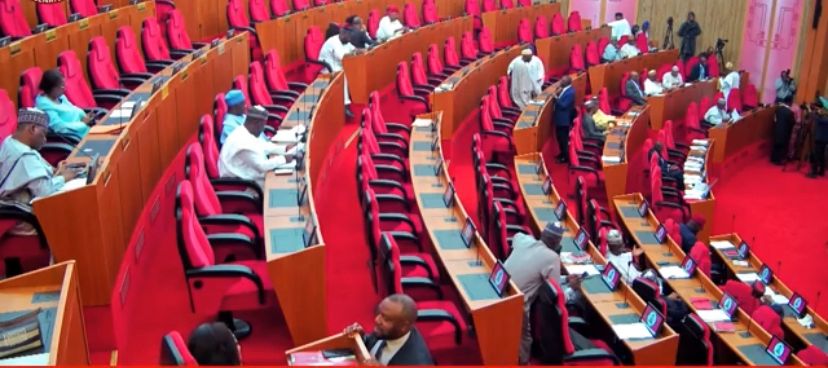
The Senate on Tuesday decided to start a law that will require tenants in Abuja to show valid identification before renting homes. This move aims to reduce crime in the area.
Senate President Godswill Akpabio asked Senate Leader Opeyemi Bamidele to write the bill for the National Assembly to consider.
Mr Akpabio announced this during a session while lawmakers discussed a report from several Senate committees on the need to protect Nigerians from being trafficked to Libya for slavery. The report was presented by Aniekan Bassey, chair of the Senate Committee on Diaspora and Non-Governmental Organisations.
Mr Akpabio was worried that many landlords rent their properties to strangers without knowing anything about them. He said this lack of information makes it hard for security agencies to track down suspects when crimes happen, which allows criminals to escape without a trace.
"A lot of people just give their properties to strangers. They don’t even have any papers to know where they come from. In some instances, the phone number that is used in renting the property does not even belong to the occupant of the house. So when something happens, the person will escape and then leave no trace," he said.
The Senate President urged Mr Bamidele to look into making laws that will improve tenant rules and make landlords responsible for checking the identities of potential tenants.
"People enter people’s properties with very bad intentions and, at the end of the day, they will just commit some crimes, traffic people’s children and make money while living in the house itself. It is something that we must tighten the laws on tenancy," he said.
Mr Akpabio suggested a system like the banking sector’s Know Your Customer (KYC) policy. This policy requires banks to check the identities of their customers.
"As you know in the bank, they say, know your customer; this one we can say, know your tenants. Let’s make the necessary law for the FCT, for instance. We can enact an Act for the FCT that says know your tenants so that nobody will come and live in the house and perpetrate crime," he said.
He added that the proposed law could also apply to shops and other business spaces. He said not verifying identities could make shop owners and customers targets for criminals.
Mr Akpabio said shop renters should provide valid IDs like a driver’s licence or international passport. This would help security agencies trace them if they get involved in criminal activities.
He noted that without reliable tenant information, property owners would struggle to identify or locate people who commit crimes in their buildings.

"And then even those that are going to do shoplets, we can use that opportunity to regulate shoplets because people go into secluded environments and then do shoplets, and then they move in and they rob them in the night and escape.
"So people who want to do shoplifting should have clear identities; you should be able to show either a driver’s licence or an international passport and other means of identification so that if you stay in somebody’s property and then you go and commit a crime, when they trace and come there and find out that this was where you live, the owner of the property may not even have an idea of who you were."
To back his argument, Mr Akpabio recalled actions he took when he was governor of Akwa Ibom State to tackle kidnapping. He said his government introduced the death penalty for kidnapping and destroyed hideouts used by criminals.
Mr Akpabio said these actions encouraged landlords to watch their properties and report suspicious activities to avoid losing them.
He believes similar laws could stop criminals from using rented homes and business places for illegal activities. If the Senate President's plans go through, the new law would require landlords in Abuja to check the identities of future tenants before renting out their properties.
This law aims to help security agencies track down people suspected of crimes from their homes and stop criminals from using rented spaces as hideouts.
But how effective it will be depends on the details of the law, like how identities will be checked, what records landlords must keep, and how compliance will be monitored.
If passed, the law could help investigators confirm the identities of tenants linked to crimes. It may also put more responsibilities on landlords and property agents, requiring them to keep identification records and share relevant information with authorities when needed.
The proposal might raise issues about privacy and the safety of tenants' personal information. Landlords might use these requirements to discriminate against some prospective tenants or deny them accommodation if they cannot provide the needed documents easily.
The Nigeria Data Protection Act 2023 sets rules for safely handling personal information. Any law that requires landlords to collect and keep tenant IDs must follow these data protection rules.
The proposal is still being drafted and needs to go through the legislative process before it can become law.






Comments
No comments yet.