The Court's Decision: Hope Uzodimma and Rochas Okorocha's Political Battle
The political battle between Hope Uzodimma and Rochas Okorocha centers on a Supreme Court ruling that confirmed Ifeanyi Ugwuanyi's governorship. This case highlights the complexities of party delegate lists.
On 8 December 2014, two governorship primaries held in Enugu. One was at Filbon Hotel, where the late Senator Ayogu Eze won with 526 votes. The other was at Nnamdi Azikiwe Stadium, where the PDP national electoral panel declared Hon. Ifeanyi Ugwuanyi the winner with 933 votes. The main issue was not who was more popular among party members. It was about the delegate list used for the elections.
Eze argued that the stadium primary that produced Ugwuanyi was based on a wrong delegate list, making it illegitimate. He claimed that the delegates in his primary came from the 1 November ward congresses. He said their list was the correct one.
Eze's argument had support from an earlier ruling by Justice Adeniyi Ademola of the Federal High Court. He had issued a temporary order stopping the PDP from accepting any other delegate list from the 1 November ward congresses except the one from the party’s Electoral Committee led by David Aja. This ruling became a key part of Eze’s legal case.
The legal battle lasted about three years and seven months, starting in December 2014 and ending at the Supreme Court, which gave its final judgment on 6 July 2018. The Supreme Court dismissed Eze’s case, confirming that Ugwuanyi kept the ticket. It was a long and tough fight, which left the governor's political future uncertain for much of that time. Eze believed he had a solid case, while Ugwuanyi had reasons to worry about a negative ruling.
There were also claims about the influence of powerful political and judicial figures on the outcome. The late Justice Centus Chima Nweze was often mentioned in discussions about the case, even if he was not the judge on the case. People alleged that he used his connections to help Ugwuanyi after many developments in the legal process. Some even called him Ugwuanyi’s judicial godfather. These claims are mostly unverified. Still, during Ugwuanyi's time in office, many in political circles viewed the late justice as someone Ugwuanyi would not want to upset.
The dispute between Uzodimma and Okorocha is both similar and different in some ways. When a judge declared Okorocha the rightful winner of the recognized primary, they also questioned the reliability of the documents that supported Uzodimma’s nomination.
The documents reportedly had contradictions, showing different ways the primary was run. One said they used Option A4, another claimed Uzodimma won by consensus, while a third said a direct primary happened. The judge found these inconsistencies important and did not give the documents much weight. The judge also criticized the party for not giving Okorocha the nomination form he requested.
The similarity between the two cases is that, in a fair contest, Ifeanyi Ugwuanyi was likely the more popular candidate and could have beaten Ayogu Eze easily. The issue was that the primary process that brought him forward was contested. Similarly, Hope Uzodimma seems to be more popular than Rochas Okorocha. But instead of risking a fair primary, he relied on his control of the party to secure the ticket, which is a common practice in Nigeria. This opened him up to legal challenges.
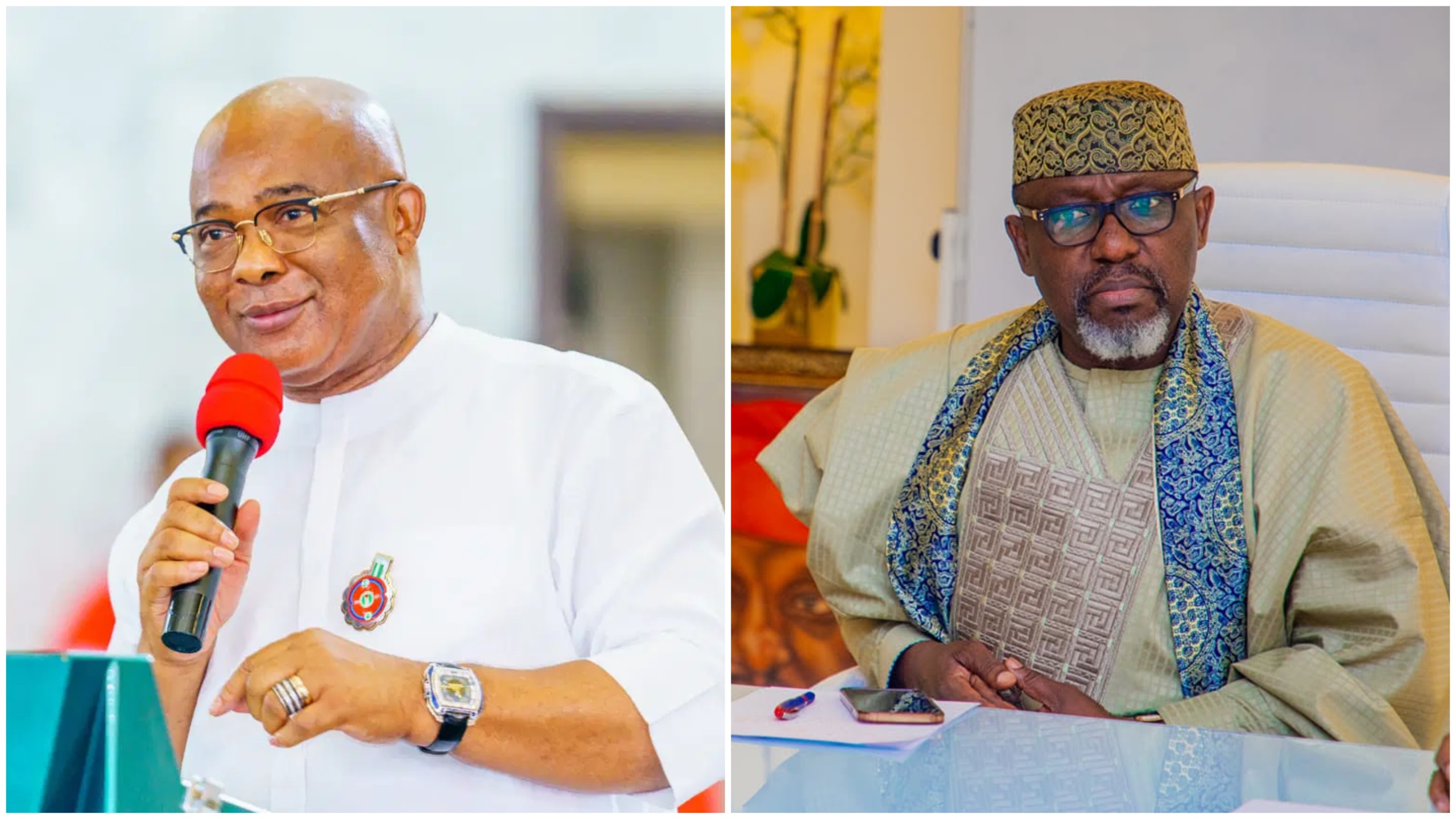
But the truth is, none of this may matter if powerful people have decided your time is up. In Nigeria, many see the courts not as fair judges of political disputes but as places where powerful figures settle scores. When the political powers decide someone must go, legal arguments can suddenly become very urgent and important. Rules can be pulled out from the law books and used enthusiastically.
Uzodimma’s problem might not only be that he came through a questionable process. Many Nigerian politicians know how to work that system. The bigger question is whether he has upset powerful interests who now want to bring him down.
There is a twist in Governor Hope Uzodimma’s situation. He rose politically due to one of the most controversial judicial decisions in Nigeria's election history. Now, he finds that the same courts can take away what they once gave him. The Federal High Court in Abuja has overturned his emergence as the All Progressives Congress candidate for Imo West Senatorial District. It declared former Governor Rochas Okorocha the rightful winner of the party’s primary and told the Independent National Electoral Commission to recognize him.
The ruling, given by Justice Obiora Egwuatu on 29 October, is a setback for Uzodimma. But it also reminds everyone of a political truth: when politicians take their fights to the courts, they must be ready for the possibility that the courts may not rule in their favor.
Uzodimma still has the Court of Appeal and the Supreme Court to challenge the ruling. He has chances to turn his situation around. He might also need to repair his relationship with influential figures in the Nigerian judicial system and their supporters, who seem to have a lot of power over the fortunes of the influential. He may also need to find his own Centus Nweze.
But if he does not succeed, he should not complain. The court gives and the court takes away. Those who have gained from the power of judicial decisions must accept the consequences, even when the decision goes against them.
Comments
No comments yet.