The Killing of Masussuka Shows Nigeria's Extremism and Terrorism Issues
The death of Islamic cleric Yahaya Masussuka shows a growing acceptance of violence among some Nigerian Muslims. This reflects serious issues in the country's security and religious landscape.
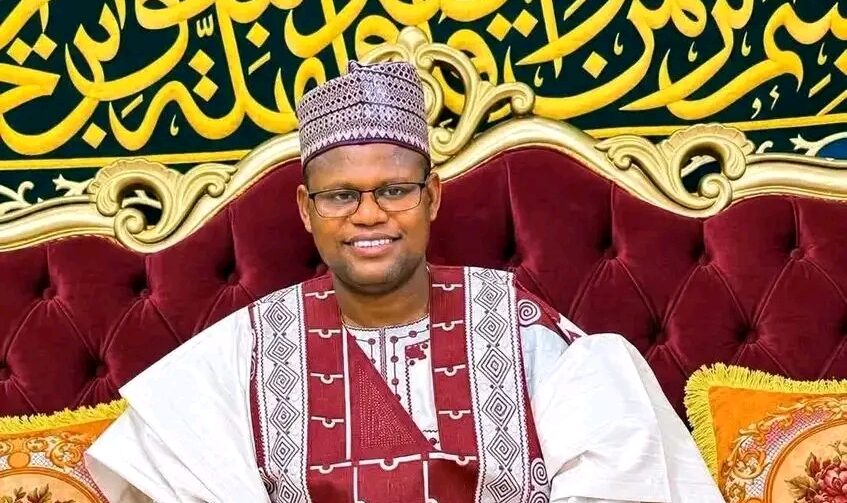
Some Nigerian Muslim fundamentalists felt relieved instead of sad after Yahaya Masussuka was killed. This reaction shows a serious issue in Nigeria’s religious and security situation. There is a growing trend of justifying or even celebrating violence against people with different religious beliefs.
In the last twenty years, many well-known Islamic clerics have been killed in northern Nigeria. Clerics like Ja’afar Adam and Auwal Albani have lost their lives. Some of their rivals even celebrated these deaths, saying the clerics were victims of the same extremism they had helped create.
Auwal Rafsanjani, who leads the Civil Society Legislative Advocacy Centre (CISLAC), said the mix-up between extremism and terrorism is affecting Nigeria’s security discussions. “Extremist ideologies that promote hatred, justify violence and encourage recruitment into armed groups can create a pathway to terrorism,” he said. He added that not all extremists are terrorists.
Mr Masussuka, an Islamic cleric, was shot outside his home in Katsina State on the evening of 26 October. His friend, Adamu Abubakar, was also killed in the attack. Police said two men on a motorcycle carried out the shooting.
After earlier reports of threats against the cleric, some of his supporters thought that rival Sunni or Izala scholars might be involved. But there is no solid proof linking those groups to the killing. Some Izala scholars have also denied these claims, insisting they have never supported violence since their group started in 1978.
The story changed when Ansaru, a splinter group of Boko Haram, said they were behind the killing. Known as Jama’atu Ansarul Muslimina Fi Biladis Sudan, the al-Qaeda-linked group operates in the Kainji area. They targeted Mr Masussuka because he rejected certain hadiths and pushed for peaceful coexistence among different faiths.
Even with Ansaru claiming responsibility, some of Mr Masussuka’s supporters still accuse rival religious scholars of being involved. They see Ansaru’s statement as an attempt to deflect blame from the Izala movement. No solid evidence connects the movement to the killing.
Amnesty International Nigeria condemned the murder and called for a thorough investigation. President Bola Tinubu also condemned the killing and ordered security agencies to look into the matter.
The terrorists who took credit for killing Mr Masussuka called him an “infidel”, suggesting he was not a true Muslim. Some of his critics use his controversial religious views to celebrate his death. Their reactions show how religious differences can create an environment where violence against those who disagree is justified or ignored.
One critic even linked Mr Masussuka to the violent Maitatsine movement, which is incorrect since he was just a baby when that uprising happened. Another person claimed that the threat from people like him was worse than the overall insecurity in Nigeria. These comments have deepened divisions within the Muslim community.
The hostility against Mr Masussuka’s teachings did not just appear out of nowhere. It is part of a larger history of religious conflicts among Muslims in Nigeria and worldwide. Disputes over religious beliefs have led to tensions and sometimes violent clashes among Muslim groups in northern Nigeria, including Tijaniyya, Qadiriyya, and Sunni-Salafi or Izala.
In the book Sects & Social Disorder: Muslim Identities and Conflict in Northern Nigeria, edited by the late Abdul Mustapha, scholars look at how different interpretations of Islam have affected religious identities and conflicts in the area. In the book’s last chapter, Mr Mustapha traces the history of violent disagreements among Islamic groups, focusing on the arguments between Sufi and reformist Muslim movements.
He shows that when groups see their claims to religious truth as exclusive, things can get dangerous. The language used in the Izala-Sufi dispute has also fueled violence. These disagreements go beyond theology, affecting everyday life. They limit access to mosques and can even strain family and community relationships.
In extreme cases, opposing members refuse to pray together or acknowledge one another at funerals. This situation also affects higher education in Nigeria. Muslim student groups like the Muslim Students’ Society of Nigeria (MSSN) and the Tijanniya Muslim Students’ Association have a long history of rivalry.
Mr Mustapha also discusses takfirism, where one Muslim calls another an unbeliever or infidel. While this practice is not solely linked to extremist groups, violent Sunni jihadists have used it to justify attacks against those they see as religiously wrong. He points out that the lines between mistakes, sins, and unbelief have become blurred in northern Nigeria, leading to accusations of apostasy that justify violence.
This history gives context to the reactions following Mr Masussuka’s killing. It shows how disagreements over religious teachings can escalate from simple criticism to denying someone’s religious legitimacy and, in extreme cases, justifying violence against them. “Declaring someone as kafir is dangerous,” said Ibrahim Makari, an imam at the National Mosque in Abuja. He described such declarations as a “gate to assassination.”
Mr Makari called for an end to the takfirism problem and urged for the protection of every citizen. He also said that there needs to be better control over religious speeches that can spark violence.
Mr Masussuka was known for his “Quran-only” teachings and for promoting peaceful living among Muslims and Christians. His rejection of hadiths as valid Islamic teachings led to opposition from other scholars. In an interview, Mr Masussuka tried to clarify the issues surrounding his views, saying he did not reject all hadiths. He only opposed those that harm the image of Prophet Muhammad or promote violence.
In November 2025, the Katsina State Government acknowledged receiving complaints about threats against Mr Masussuka from some Izala group members. The government also got complaints about his teachings and referred the matter to the Katsina Emirate Council. There is no solid proof linking those complaints or the people accused of threatening him to his murder. Nor is there any evidence linking the Izala movement to the attack.
Still, the history of disagreements about his teachings shows how hard it is to accept different religious views in a place where such differences can lead to hostility. While Mr Masussuka’s killing has brought attention to religious intolerance among Muslim communities, this issue is not only limited to Islam or northern Nigeria.
People across Nigeria face threats, violence, and discrimination because of their religious beliefs, whether they are Christians or practice traditional African religions. In May 2022, Deborah Samuel, a Christian student, was killed by her peers after being accused of blasphemy against Islam. Another Christian, Rhoda Jatau, was arrested for sharing a WhatsApp message that condemned Deborah’s murder.
Traditional religious followers also face challenges. In Kwara State, they have reported threats and restrictions on their practices. In Delta State, a Christian group destroyed a traditional shrine belonging to a local community in December 2024. A Federal High Court later ruled that this harassment was unconstitutional, ordering the church members to rebuild the shrine and pay damages.
While these cases differ in details, they highlight a common problem that officials still struggle to manage. Military leaders and security experts have said that fighting terrorism cannot just rely on military action. The military’s non-violent approach mostly involves peace deals with terrorists.
Efforts must also focus on addressing the stories that allow extremist groups to see people with different beliefs as enemies. “Religious and traditional leaders must do more to fight extremist ideas, promote peaceful living, and protect young people from being manipulated,” Mr Rafsanjani said. “The government should also separate criminal violence from legitimate religious beliefs and lawful dissent,” he added. “Fighting terrorism should never be a reason for religious profiling or persecution.”


Comments
No comments yet.