Tinubu's Visit to Dutse: Expectations for 2027 and Key Issues
President Tinubu's rally in Dutse showcased political unity and highlighted key issues for the upcoming 2027 elections, including economic reforms and security.

Political rallies are often remembered for their colorful displays, excited crowds and loud cheers. But beyond the fun, they raise serious questions about leadership, governance and how government actions affect citizens' daily lives.
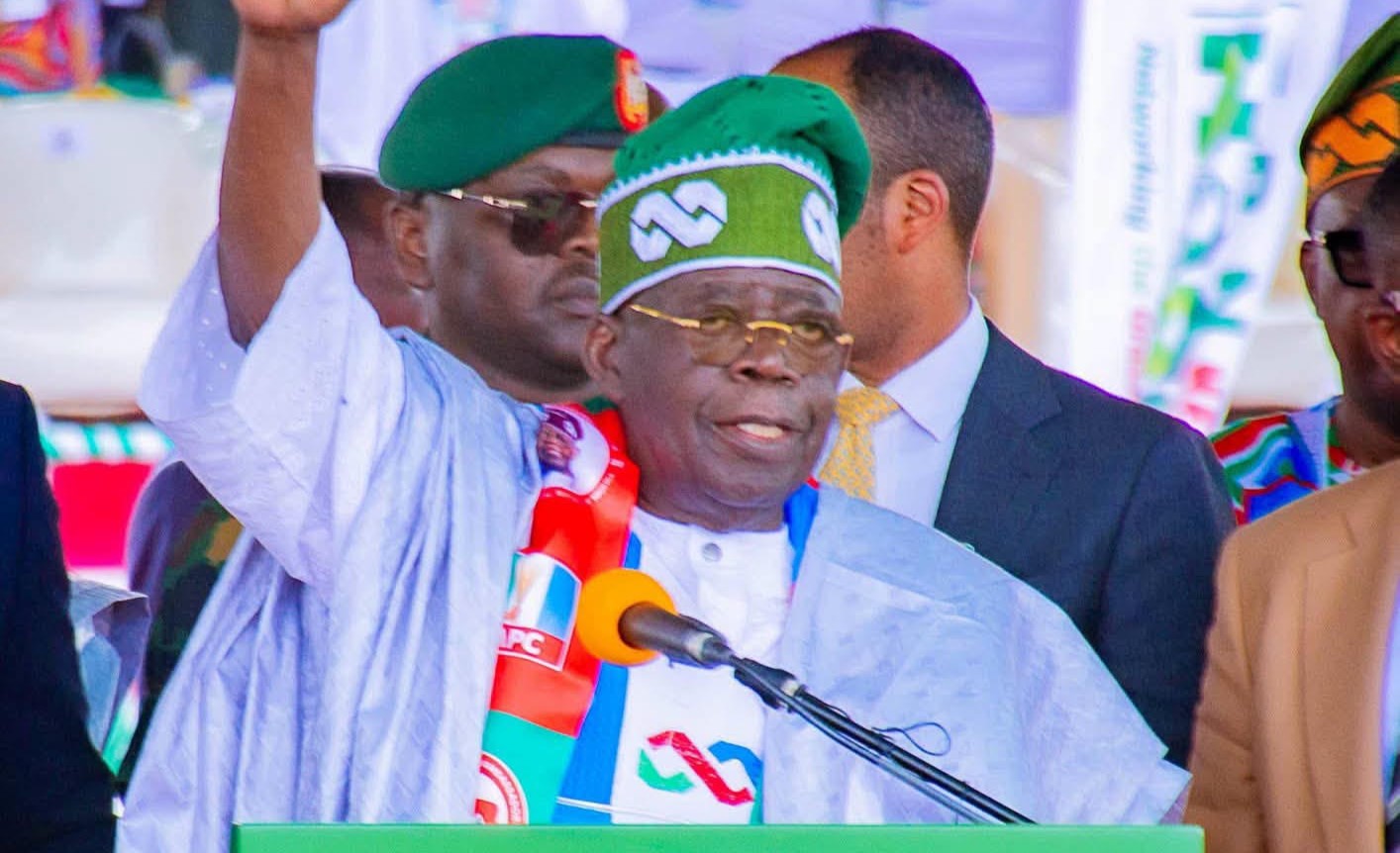
President Bola Ahmed Tinubu’s trip to Dutse, Jigawa State, gave a chance to look into these matters as Nigeria heads toward the 2027 elections.
The event at Dutse Township Stadium drew supporters, party leaders and political groups, including the Tinubu Movement for Sustainable Governance Foundation (TMS), which is also known as Tinubu Must Stay.
For the organizers, the large turnout showed political unity. But more than just numbers, the rally was a chance to talk about economic reforms, agricultural growth, infrastructure, security and what Northern Nigerians expect from the government.
Dr Usman Baita Elleman, the TMS Director of Special Duties, said the gathering showed the increasing acceptance of Tinubu’s leadership.
"The rally was very beautiful. People came out in their numbers to show solidarity with the President and the governor. From what we saw today, there is no doubt that President Tinubu enjoys enormous support in Jigawa State and across Northern Nigeria," he said.
While a rally’s attendance cannot alone prove public support in a whole region, it highlighted the need for grassroots involvement in Nigeria’s politics.
TMS, led by Kashifu Inuwa Abdullahi, the director-general of the National Information Technology Development Agency (NITDA) and a native of Jigawa State, played a big role in mobilizing support through banners, billboards and other campaign materials.
But beyond the show, what matters is how the movement explains government policies and addresses public worries.
Elleman admitted that some economic decisions, especially the removal of the petrol subsidy, have caused hardship for many Nigerians. Yet, he insisted that these reforms were necessary to fix deep-rooted problems and improve public finances.
"We are telling Nigerians the facts about these policies. Some of the decisions may be painful, but they are aimed at putting the country on a sustainable path," he said.
This discussion reflects a key debate around the Tinubu administration's actions.
For years, past administrations struggled with the costs of petrol subsidies. Supporters of removing it argued that it caused waste, messed with market dynamics and took away funds from important development projects.
Critics warned that taking away subsidies without proper measures would raise transport costs, increase food prices and worsen the struggles of poorer families.
The situation since the policy change shows the need to balance financial health with social safety nets.
For a farmer in Hadejia, a trader in Kano or a commercial motorcyclist in Dutse, economic reform is not just about numbers. It affects the prices of fuel, food, transport and other essentials.
That is why government communication must explain not just why reforms are happening but also the real benefits people should expect.
At the rally, President Tinubu defended the subsidy removal and dismissed claims that it could return.
"To those who say subsidy is coming back, it’s a lie. Don’t let them lie to you again. It is not going to come back," he told the crowd.
He argued that money once used for subsidies should now support infrastructure, agriculture, education and social development.
"We have to think about the future of our children. The money must be invested in areas that will create prosperity and opportunities for all Nigerians," he said.
This point is clear, but it needs to be backed by open spending and real results. Nigerians want to see how money is spent, which projects are happening and if the benefits make the sacrifices worth it.
Agriculture is a key area to watch in Northern Nigeria.
The region has great farming potential, but farmers still face issues like lack of funding, machinery, irrigation, storage, transport and insecurity.
President Tinubu announced plans to increase agricultural support through interest-free loans and mechanized farming centers across the six geopolitical zones.
"We have to invest in agriculture. There will be interest-free loans for farmers. Prosperity is coming. Food security will happen," he said.
These promises tackle real problems, but success will rely on proper execution. Farmers need easy access to funding, affordable gear, effective support services and dependable markets.
Mechanization centers must help small farmers and not just be fancy buildings that are forgotten after opening.
Likewise, interest-free loans need clear selection processes, timely delivery and good oversight.


The President also mentioned investments in electricity, skill training, youth empowerment, job creation and support for small businesses.
His reference to the Nigerian Education Loan Fund (NELFUND) was particularly relevant for young Nigerians facing money issues for higher education.
Student loans can open doors for education, but they must be accessible, paid on time and managed well. Education support should also connect with job opportunities and the needs of the job market.
A student loan might help someone go to university, but real job chances are crucial after graduation.
Vice-President Kashim Shettima added to the conversation by mentioning infrastructure projects in Northern Nigeria.
He pointed to the Kano, Maiduguri Road, Kano, Maradi railway and Kwanar Danja, Hadejia Road as examples of the government’s development efforts.
These projects could impact regional trade, farming output, transport and economic cooperation.
But we should assess infrastructure success based on real construction progress, completion dates, spending transparency and benefits to communities.
Announcing projects and awarding contracts should not be the same as having finished infrastructure.
Security is also a big issue. President Tinubu stated his government is boosting the capacity and welfare of security forces to better tackle crime.
For communities dealing with banditry, kidnappings and other dangers, security promises matter when farmers can work their lands, traders can travel safely and families can go about their lives without fear.
In this context, TMS's role is significant.
Elleman explained that the movement plans to boost grassroots outreach through policy education, community involvement and support for small businesses.
Such programs can help people understand government actions, especially where information is lacking.
But honest political communication must also admit gaps in implementation, address real concerns and differentiate between what has been achieved and what is still promised.
Citizens should be seen as partners in governance, not just as audiences for political speeches.
If a program is delayed, the reasons should be clear. Where things work, there should be proof. Where challenges remain, public worries should be taken seriously.
The same standards should go for opposition parties, whose job is to hold the government accountable and offer realistic alternatives.
As the 2027 elections draw closer, political competition will heat up. Parties and groups will hold rallies, promote candidates and argue over policies.
This competition is key to democracy, but it matters more when based on facts, accountability and respect for different views.
The Dutse rally showed the energy of political mobilization and brought up issues that will keep shaping public discussions: economic reform, food security, infrastructure, education, jobs and national security.
But we cannot judge its importance just by how many people turned up or how excited they were.
For the Tinubu administration, the challenge is to prove that tough economic choices are leading to real improvements.
For TMS and other advocacy groups, the job is to communicate policies clearly while listening to the public.
For the opposition, the task is to offer serious criticism and practical alternatives.
In the end, Nigerians must measure political promises against their real-life experiences and the government’s actual performance.
The path to 2027 will surely feature more rallies, political statements and differing stories. But beyond the noise lies a crucial question: Are government actions truly improving the lives of Nigerians as they work, learn and chase their dreams?
The true test of leadership is not how loud supporters cheer for government actions but how effectively those actions lead to economic stability, security, opportunities and a better life for citizens.

Comments
No comments yet.