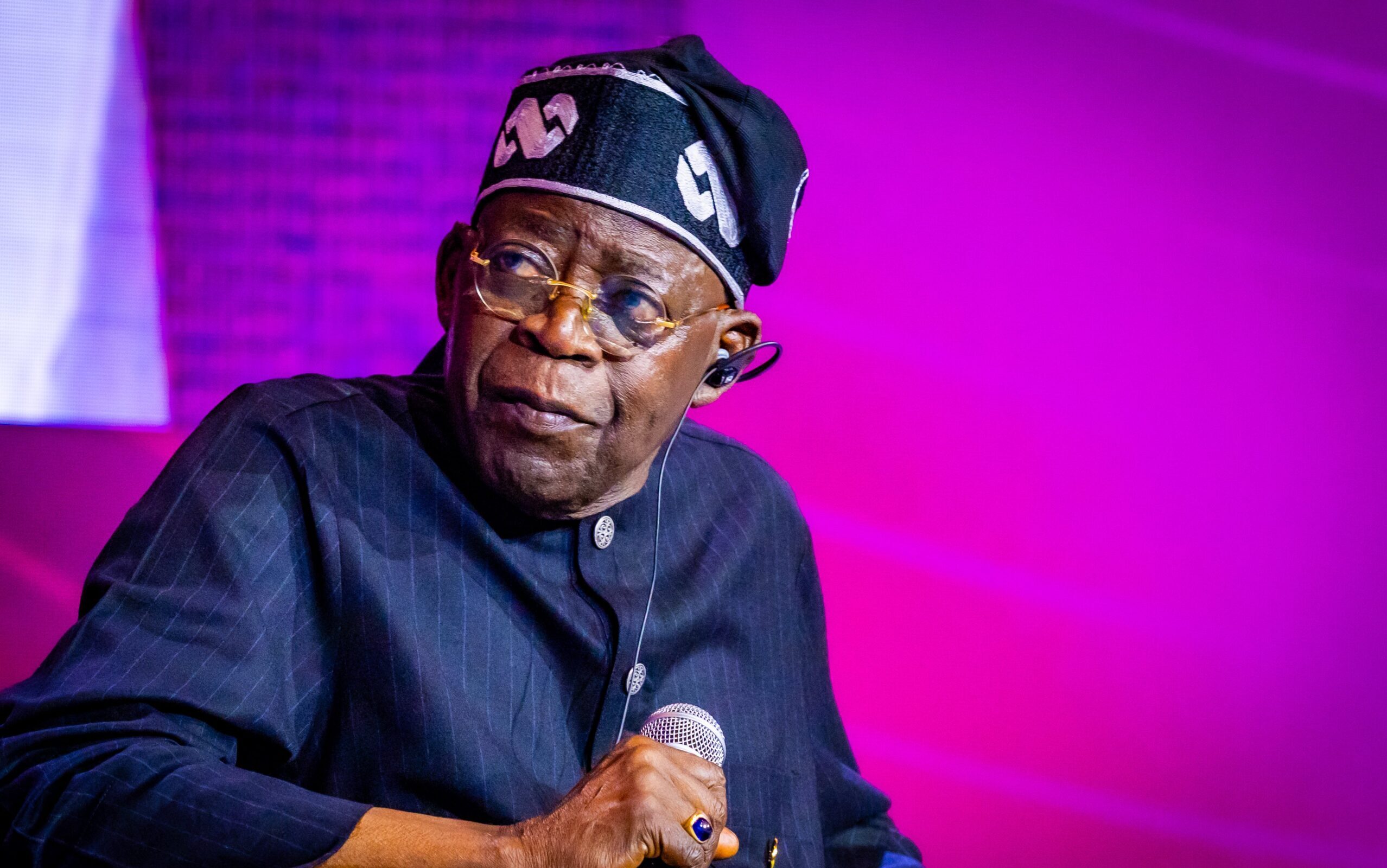
President Bola Ahmed Tinubu is building a highway between Calabar and Lagos. This project is political, historical, and economic. I will focus on the historical side. It shows respect for Calabar and what this ancient city means to us.
There is a saying that goes, "GOD LOVES CALABAR, A LAND OF BEAUTY." The calmness of Calabar impresses anyone who visits. The heart of a city is its people. The people of Calabar have much to offer. The city is filled with valued historic buildings. A drive around Calabar city is a great experience.
Maybe the new highway is a way to make up for Calabar not having a rail system. The first railway in Nigeria was built in 1891 between Lagos and Ibadan during British rule. Even when the eastern rail line was built between Port Harcourt and Maiduguri, Calabar missed out. Cities like Minna, Zaria, and Kano had rail access, but not Calabar.
The Lagos-Calabar railway project was first planned during President Goodluck Jonathan's time in 2014. The Federal Executive Council approved it, but it has not started yet.
The British colonial government moved the country’s administration from Calabar after local chiefs signed a protection treaty in 1884. Old Calabar was the first colonial government center for the Southern Protectorate and the Oil Rivers Protectorate. This changed in the 20th century when they moved the administrative center to Lagos.
Lagos became Nigeria’s first capital and administrative center in 1914. Calabar is like a living museum of Nigeria's history.
Lagos was declared the first national administrative center during the 1914 Amalgamation Proclamation by Sir Lord Frederick Lugard. He announced Lagos would be the capital, stating: "For the present, the Central Headquarters will remain at Lagos, and the Governor-General will divide his time between the Headquarters Stations of the Northern and Southern Provinces." This marked the start of our capital cities’ evolution.
Before 1914, Calabar, now the capital of Cross River State, was the main administrative center for the Southern Protectorate. Kaduna was the political capital of the Northern Protectorate before the unification.
Calabar was the first significant city for the Southern Protectorate after it came under British rule on September 10, 1884. It also served as a major precolonial trading port in West Africa.
In 1900, Sir Lord Frederick Lugard moved the government seat to Lokoja and later to Jebba and Zungeru. By 1912, he sought a better location and decided on Kaduna. Even though he named Lagos the government seat in 1914, he preferred Kaduna.
When the Portuguese arrived in the 15th century, they referred to the local tribes as "Calabar." The tribes included the Quas, Efuts, and Efiks. The Efik people moved to Calabar from the Niger River to escape civil war.
Calabar has been an international seaport since the 16th century, exporting palm oil and was a key port during the Atlantic slave trade. Many people from the area were captured and sold as slaves. From 1725 to 1750, about 17,000 enslaved Africans were sold from Calabar to European traders; from 1772 to 1775, that number grew to over 62,000. Old Calabar (Duke Town) and Creek Town, northeast of Calabar, were crucial in the slave trade.
The first army barracks in Nigeria was built in Calabar in 1903. The first English newspaper in Eastern Nigeria, The Nigeria Eastern Mail, was also published in Calabar. In 1890, Calabar became home to the first maximum-security prison.
Calabar is important to Nigeria's football history. The first recorded football match happened on June 15, 1904, at the Hope Waddell Training Institution, featuring students against sailors from a British naval ship.
Mary Mitchelle Slessor arrived in Nigeria in 1878 to fight against the killing of twin children. She lived in Odukpani and built a mud house called a Caravan, which locals called "Fine Pass All."
In 1889, a carpenter built her a more permanent structure. This building had iron sheet walls and wooden doors. Her legacy continues with celebrations of her birthday in Cross River State.
Calabar has much to share. The coastal highway project reminds us of its importance.
In the late 19th century, as European powers fought for control in Africa, the British solidified their influence in the Niger Delta. In 1884, Queen Victoria signed a treaty with Calabar chiefs, allowing Britain to manage trade there. Soon after, the Oil Rivers Protectorate was formed in 1885 to handle trade and conflicts. The territory was renamed the Niger Coast Protectorate in 1893, with Calabar as its capital.
Calabar’s location made it a perfect choice for headquarters. It had long been a busy port for palm oil and other exports important to British industries. As the slave trade ended, local merchants became influential, negotiating with European companies. British treaties with Efik chiefs eased trade and strengthened British control over local economies.
Calabar also became a center for early education and religious growth in Nigeria. Scottish missionaries started schools and churches in the mid-19th century, shaping local institutions. The Hope Waddell Training Institution, founded in 1846, was one of the earliest secondary schools in the area. These institutions helped create local leaders and influenced the culture.
In 1922, the British set up the Legislative Council with elected members from Calabar and Lagos. This was one of the first forms of representation in British West Africa. The council approved budgets and laws, laying the groundwork for Nigeria's political growth.
Calabar’s role as the headquarters for multiple protectorates helped shape modern Nigeria.
Personally, I feel excited whenever I visit Calabar. The calmness of the city is refreshing.
Nationalism and the fight for Nigeria’s independence started in Calabar. Professor Eyo Ita famously said, "This is the day of Nigeria youth. It must build a new social order..." He urged the youth of Calabar to create a better future.
He spoke of securing basic needs before seeking luxury. Calabar is beautiful, and Nigeria is beautiful. We must show our country's beauty through our art. Calabarians must fully commit to improving their community. The love for Calabar should inspire us all.
God cares for our homes and our people. He supports our well-being and freedom. He speaks to us through our land, animals, and the love of our mothers and friends. The youth must recognize their role in serving this cause. Nigeria is valuable to God, and their work is part of a bigger plan.
By building this highway, President Tinubu shows appreciation for the South South people. The emergence of President Goodluck Jonathan on May 6, 2010, the creation of the NDDC, the Ministry of Niger Delta, and the Amnesty Programme are not enough for the South South region.
This region has contributed a lot to Nigeria. Its leaders, some alive and others gone, have helped shape this country. We owe them gratitude we cannot repay fully. Some names include Professor Eyo Ita, Ernest Sesei Ikoli, Kenule Saro-Wiwa, and others.
Let’s look at a few of these influential figures.
Professor Eyo Ita (1903, 1972) founded the Nigeria Youth League Movement. He was born in Calabar and educated at Duke Town School and the Hope Waddell Training Institute. After teaching in Lagos, he studied in the USA. He returned in 1933 and became active in education and nationalism.
Ita formed the Nigeria Youth League Movement, which had a slow start. He returned to Calabar in 1938 and led the National Institute founded by educated locals. He established the West African People’s Institute, known for publishing his works.
He was a prominent member of the National Council for Nigeria and the Cameroons (NCNC) and was elected to the Eastern Nigeria House of Assembly in 1951. He became Minister for Natural Resources and Government Leader in the region after the NCNC won elections.
Chief Ernest Sesei Ikoli (1893-1960) was born on March 25, 1893. His father was a successful merchant, and his mother was among the first educated women from the Niger Delta. He was educated at Bonny Primary School and King’s College in Lagos.
Ikoli worked in journalism, becoming the first editor of Daily Times. He was also involved in politics, leading the Lagos Youth Movement and serving on the Legislative Council. He was known for his strong political presence until his death shortly after Nigeria's independence.
Dr Clement Isong (April 20, 1920, May 29, 2000) was the second Nigerian Governor of the Central Bank. He was talented in many areas, including teaching, banking, and politics.
Born in Eket, he studied in Ibadan and the USA, earning a PhD in Economics. He served as Governor of the CBN during a critical period and later became the first civilian Governor of Cross River State. He was honored as a Commander of the Federal Republic of Nigeria in 1982.
Sir Dennis Osadebay (June 29, 1911, December 26, 1994) was a former premier of the Mid-Western Region of Nigeria and a pioneering poet. He had a mixed cultural background and was educated in Calabar and England.
Osadebay was also a political leader and worked to establish the Mid-Western region. He wrote poetry and used his life experiences in his work.
Chief Festus Okotie-Eboh (July 18, 1912, January 15, 1966) was Nigeria’s finance minister from 1957 to 1966. He was born in the Niger Delta and educated in various schools.
After starting his career in business, he entered politics and quickly rose to power. He was influential in the financial sector until the fall of Nigeria’s first civilian administration.
Professor Horatio Oritshejolomi Thomas (1917-1979) was a surgeon and university administrator. He specialized in facial surgery and served in major universities in Nigeria.
Born in Sapele, he studied in England and returned to Nigeria to contribute to medical education. He became the first Nigerian head of the College of Medicine at the University of Lagos and later served as Vice Chancellor at the University of Ibadan.
Chief Edwin Clarke (May 25, 1927, February 17, 2025) attended schools in various locations before studying further at the Government Teacher Training College. He worked briefly before his political career began.
Clarke has had a significant role in Nigeria’s history and continues to be remembered for his contributions.
Drop your comment
No comments yet — be the first to drop the gist 👇