Writers Should Critique Government Without Promoting Violence, Says Akume
At the ANA convention, George Akume urged writers to critique the government without promoting violence, highlighting the role of literature in society.
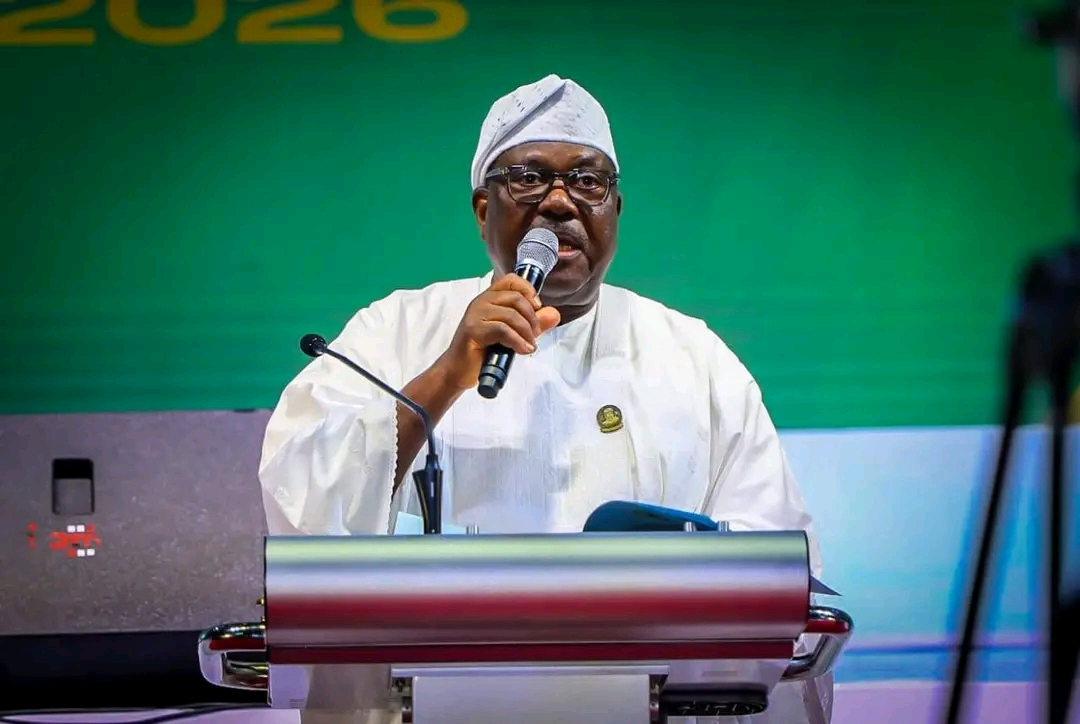
The Secretary to the Government of the Federation, George Akume, has called on Nigerian writers to keep questioning those in power. He emphasized that they should not use their words to spread violence or create more divisions among people.
Mr Akume was represented by Bekearedebo Augusta Warrens, the Permanent Secretary for Political and Economic Affairs in the Office of the SGF. She spoke at the start of the 45th International Convention and Conference of the Association of Nigerian Authors (ANA).
The event took place on 30 October at the Mamman Jiya Vatsa Writers’ Village in Mpape, Abuja.
This year’s convention had the theme “Literature, National Security and the Place of Nigeria in the World.” It brought together writers, scholars, and other stakeholders to look at how literature can help with peace, security, and Nigeria’s image abroad.
In her speech on his behalf, Mr Akume said literature is more than just entertainment. He noted that writers often highlight the struggles of their communities and express experiences that many people find hard to put into words.
He pointed out that poems can reflect shared feelings, while plays and other literary works can show the effects of injustice in ways that numbers cannot convey. He insisted that writers have the right to address tough issues, question public officials, and criticize government policies. But he warned against using their words to stir up anger among Nigerians.
“This does not mean that writers should avoid difficult subjects or that government criticism should be discouraged, far from it. Freedom of expression and the right to question those in authority are important features of democratic life,” Mrs Warrens said, quoting the SGF.
“What we should resist is the deliberate use of words to incite violence or cause Nigerians to hate one another.”
Mr Akume urged ANA members to speak out about the nation’s problems while presenting their views in ways that promote understanding and encourage practical actions.
“My appeal to members of the Association of Nigerian Authors is simple: Nigeria needs honest voices, not silence,” the address stated.
“Continue to speak frankly about our national challenges. Help us confront the issues that divide us, but do so in ways that deepen understanding and encourage solutions.”
He added that meaningful discussions between intellectuals and policymakers could help shift public conversations from blame to real solutions.
According to him, contributions from groups like ANA could enhance national discussions and improve government policies.
Senator Ekong Sampson, who also spoke at the convention, described writers as prophets whose works often predict the crises societies face later on.
He mentioned Chinua Achebe’s A Man of the People and Cyprian Ekwensi’s writings, noting that Nigerian authors have long warned about the political and social issues the country is dealing with.
“Writers have paid their dues. They have prophesied, and they must be listened to,” he said. “The more we listen to our writers, the safer we are as a country.”
Mr Sampson urged the government to protect the legacies of Nigerian writers, saying their works keep their memory alive long after they are gone.
He remembered poet Christopher Okigbo and soldier-poet Mamman Jiya Vatsa, after whom the ANA Writers’ Village is named. He argued that a democratic society might have provided them with more protection.
While Mr Okigbo died during the Nigerian Civil War and Mr Vatsa was executed after being convicted for an alleged coup plot, the senator said their stories live on thanks to their literary contributions.
“Writers never die. Writers live on through the stories they have told,” he said.
Mr Sampson said the government should not be distant from its citizens, just as writers should not see public institutions as unreachable.
He emphasized that insecurity affects everyone and requires a collective effort, rather than leaving it all to security agencies or the government alone.
“With insecurity, you are either infected or affected,” he said. “It is a great responsibility, so we must all join hands. More importantly, we must listen to writers.”
The senator noted that Nigeria has many laws but struggles with enforcement. He urged citizens and public officials to take responsibility for following and enforcing these laws.
He challenged writers to look at current issues in light of past experiences and provide society with broader insights.
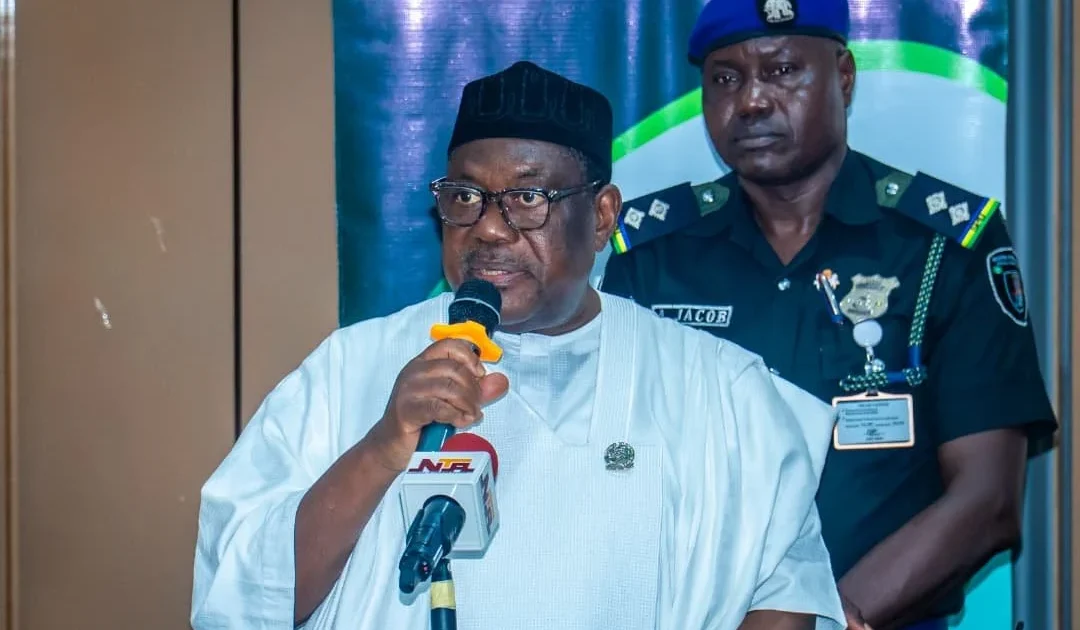
Mr Sampson pointed to the monthly Uyo Book Club as an example of how writers could build closer ties with public institutions. The club brings officials, readers, and writers together for book readings and discussions with featured authors.
“You get close to the government that way,” he said. “I look forward to ANA meeting me the same way. Let us see how we, as writers, can meet, talk to ourselves and determine how we can work with the states for facilities.”
In his keynote address, Professor Mahfouz Adedimeji said literature should not be seen as just propaganda or only for entertainment.
He discussed the link between literature, peacebuilding, and the effort to shape public perception. He argued that national security cannot be achieved with military force alone.
Mr Adedimeji suggested that literature should be included in Nigeria’s security and peacebuilding plans. He said films, plays, and other creative works should help build a peaceful society instead of focusing only on awards and profits.
He also called for more focus on literature and the humanities in the education system, highlighting the importance of reading, writing, critical thinking, ethical reasoning, civic consciousness, and cultural understanding.
“The world is in turmoil today because guided weapons are in the hands of misguided people,” he said.
He pointed out that society often prioritizes economic figures and other measurable data at the cost of values and the quality of human relationships.
Mr Adedimeji stated that literary efforts cannot make up for poor governance, injustice, and institutional failures.
He urged political leaders to show through their actions that every Nigerian has dignity, value, and a stake in the country.
The professor said insecurity goes beyond physical violence to include political, food, economic, personal, and environmental threats.
He noted that many security issues stem from damaged human relationships and crises of trust, citizenship, justice, memory, and identity.
Literature, he said, can reveal injustice before it becomes accepted, change how citizens think, and give Nigeria a voice that reaches beyond regular diplomatic and political channels.
ANA National President Usman Oladipo Akanbi praised the federal government for supporting Nigerian writers, including providing the land for the writers’ village.
Mr Akanbi also recognized the government's support for measures that allow authors to gain from the reproduction of their works through the Reproduction Rights Society of Nigeria.
He urged the government to work harder on tackling insecurity and creating conditions that would restore Nigerians’ faith in the country's future.
“No nation can grow when its young people have lost hope. And without hope, no reform can succeed,” he said.
“Reforms, however well-intentioned, must not be seen as punishment.”
Mr Akanbi advised political parties, candidates, and their supporters to avoid inflammatory behavior as preparations for the 2027 general elections intensify.
He insisted that political competition should not lead to violence or hostility.
“We must ensure that the 2027 elections are conducted in an environment free of rancor, bitterness, and ill will,” the ANA president said. “Our politics must not become a war.”
He concluded that building a stable country needs cooperation between citizens and those in power.
“Nation-building is a collective task. Government cannot do it alone, and citizens cannot thrive without responsible government,” he said.





Comments
No comments yet.