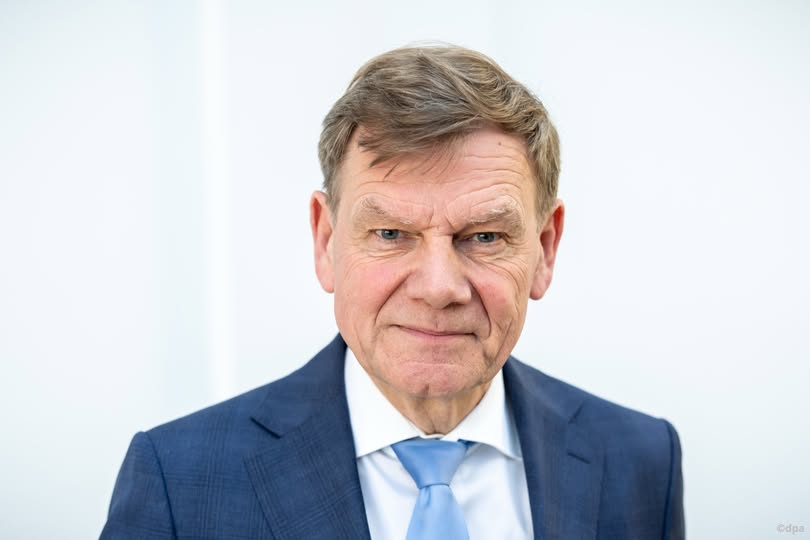
The German Foreign Minister, Johann Wadephul, will visit Nigeria for two days. This visit aims to boost diplomatic, economic, and security ties between the two countries.
A statement from the German embassy in Nigeria confirmed that Mr Wadephul will arrive on Tuesday and Wednesday, July 21-22.
This trip marks Mr Wadephul's third visit to Africa this year. He previously visited Ethiopia and Kenya in January, and Morocco in April.
He will be joined by a group that includes German parliament members, CEOs, and top officials from German IT and energy companies. Their first stop will be in Abuja.
In Abuja, Mr Wadephul is set to meet with the President of the Economic Community of West African States (ECOWAS) Commission, Omar Touray, and Nigeria’s Minister of Foreign Affairs, Bianca Odumegwu-Ojukwu.
“The Foreign Minister will participate in a business roundtable with representatives from German and Nigerian companies. This will highlight the growing economic partnership between both countries and explore opportunities for increased trade and investment,” the statement read. He will also meet with civil society representatives and cultural practitioners.
Next, Mr Wadephul will travel to Lagos. There, he will focus on strengthening economic and cultural connections.
The embassy noted that the relationship between Germany and Nigeria is based on a strong partnership of mutual respect and common interests.
“As Africa’s largest economy and one of Germany’s important partners, Nigeria plays a key role in addressing global issues. These include sustainable economic development, energy transition, and regional peace and security,” it said.
Germany is the largest economy in the European Union. It is also one of its most influential members, shaping the EU’s policies on trade, development, climate action, and foreign affairs.
Germany is a key trading partner for Nigeria in Europe and contributes significantly to development programs across Africa.
Mr Wadephul’s current visit is part of a three-nation diplomatic tour. He is moving from Mauritania to Nigeria and then to South Africa.
His regular visits to Africa over the past seven months show Berlin’s efforts to engage more with the continent. This also reflects Europe’s search for stronger partnerships in energy, trade, and regional stability.
This visit comes as Europe’s influence in the Sahel is decreasing. The Alliance of Sahel States (AES) includes three West African countries that have had military coups and are moving closer to Russia, moving away from the West.
France’s issues with AES nations have affected the supply of uranium. Niger was a key exporter of uranium to Europe, providing about a quarter of its total imports.
Yet, in 2024, the Junta-led government under Abdourahamane Tchiani nationalized its uranium resources. It also revoked the operating license of Orano, a French nuclear fuel producer, at one of the world’s largest uranium mines. Niger ordered the company to leave Somair, Cominak, and Imouraren, the three main mines in the country.
This order came about a year after the Junta expelled French soldiers and closed French military bases.
Ahead of his trip, Mr Wadephul emphasized that Africa and Europe share important political, economic, and security ties. He stated that reliable cooperation with Africa is essential for Europe in today’s global political climate.
Drop your comment
No comments yet — be the first to drop the gist 👇