How I Plan to Start Ibom Deep Seaport Construction in 90 Days if Elected
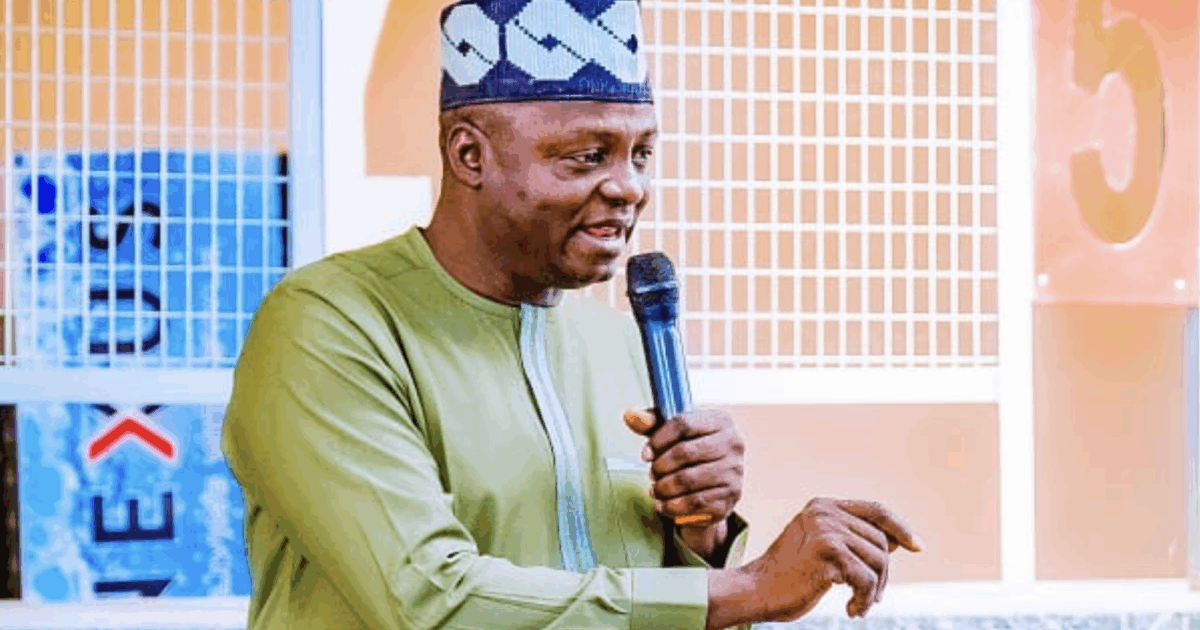
Michael Enyong, NDC candidate for governor, vows to begin construction of Ibom Deep Seaport within 90 days of taking office. He aims to attract private investors for the project.
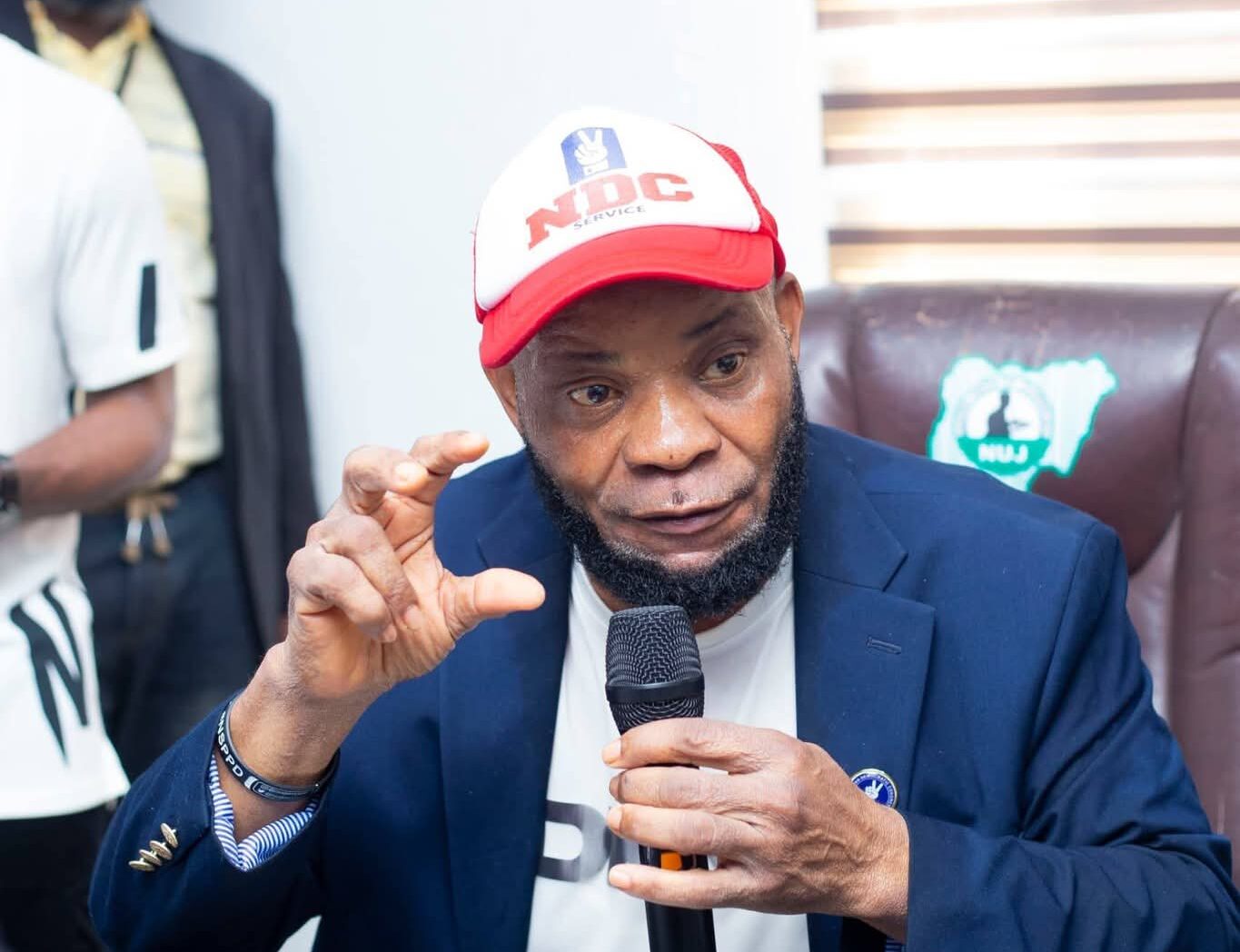
The candidate for governor from the Nigeria Democratic Congress (NDC) in Akwa Ibom State, Michael Enyong, has promised to start building the long-awaited Ibom Deep Seaport within 90 days of taking office in 2027. He stated that he would move the project from Ibeno to Ibaka and attract private investors.
Mr Enyong, who previously served in the House of Representatives, explained that the move was necessary. He said the Ibeno site is too shallow and would need costly dredging. This makes the project less appealing to investors.
He made these promises while speaking to PREMIUM TIMES on 1 November, after discussing the project during a visit to the Akwa Ibom State Council of the Nigeria Union of Journalists (NUJ) in Uyo.
The NDC candidate stressed that the 90-day commitment is not just about starting talks or studies. He wants to begin real construction.
“Within the first 90 days, I will get it going,” he said. He also mentioned having an American investor ready to join the project and another potential investor from France.
This pledge adds a new point to the ongoing discussion about the seaport. It is a multi-billion naira project that has been part of Akwa Ibom’s plans for over 20 years but has not yet begun.
Mr Enyong said the project was first planned as the Ibaka Deep Seaport under former Governor Victor Attah. It was later renamed Ibom Deep Seaport and shifted to Ibeno during former Governor Udom Emmanuel's time.
He said he will keep the name Ibom Deep Seaport because it is already registered and approved, but he will bring the project back to Ibaka. He believes Ibaka has a better natural harbour and will cut down dredging costs.
“The moment you return it to Ibaka, investors will know that they won’t spend too much money on dredging an artificial location because the water there is shallow,” he explained.
The choice of location has caused disagreements for many years. In December 2014, Vanguard reported that consultants had moved the port from Ibaka to Ibeno. They said Ibaka would not be commercially viable because of its distance from the sea.
The Akwa Ibom State Government defended the decision, stating that experts evaluated different sites based on viability and accessibility before selecting a location that spans parts of Mbo and Ibeno local government areas.
Mr Enyong did not present any new studies to back up his claim that returning the project to Ibaka would be more viable than the current location.
He added that the project does not need fresh approval from the President or for Governor Umo Eno to switch to the All Progressives Congress. He noted that the Federal Executive Council (FEC) approved its first phase on 16 December 2020.
He said the first phase investment of $2.016 billion can come from private investors and contributions from the state and federal governments.
According to him, the private investor would cover 50 per cent of the funding, while both governments would cover the other 50 per cent.
He argued that Akwa Ibom can easily finance its part, pointing to the state's revenue under Governor Eno.
“Assuming we divide the money in half, the state’s portion is very affordable to achieve considering that in the last 42 months, the state has gotten over N3.7 trillion,” he said.
He estimated the state’s share at $400 million, which is about N538.59 billion at the exchange rate of N1,346.47 to the dollar on 1 November.
But his funding plan is different from what was earlier announced when the FEC approval was given. In December 2020, the former Akwa Ibom Commissioner for Economic Development and Ibom Deep Seaport, Akan Okon, said private investors would provide 60 per cent and the public sector would contribute 40 per cent.
The difference is significant because the public sector’s 40 per cent share would amount to $806.4 million, while the private sector’s 60 per cent would be $1.2096 billion.
If the public sector’s share were split evenly between the state and federal governments, Akwa Ibom’s share would be $403.2 million, which is close to Mr Enyong’s estimate of $400 million.
However, he did not explain why he is suggesting a 50-50 funding structure instead of the previously mentioned 60-40 public-private partnership.
He also did not provide details about the American and French investors he mentioned, their financial commitments, or if they have signed any agreements with him or project authorities.
When asked how he would secure the federal government’s contribution, Mr Enyong said the state has to show commitment to the project first.
He believes the federal government will be encouraged to join in once the state shows seriousness, adding that the project can still move forward without federal funding.
“But even if the federal government fails to invest, don’t we have the $800 million? It is our project that will turn around things,” he stated.
When reminded that the $2.016 billion approval was only for the first phase and that the overall project is estimated to cost $4.6 billion, Mr Enyong said attracting more investors would be easier once construction starts.
“When you start a project and people begin to see where you are going, don’t others join?” he asked.
The candidate insisted that he would begin construction within his first 90 days in office.
The planned seaport has continued to appear in Akwa Ibom’s yearly budgets under Mr Eno, but it is hard to find out how much has actually been spent on it from public financial records.
A review of the state’s approved budgets shows that N7.36 billion was set aside for the Deep Seaport and Industrial City in 2026. The state allocated N2 billion in 2025 and N2.6 billion in 2024. No allocation was found for the project in the state’s 2023 revised budget.
However, PREMIUM TIMES could not confirm how much the Eno administration has spent on the project. The state’s recent budget performance reports do not detail capital expenditures.
PREMIUM TIMES previously said that Mr Eno’s administration collected at least N2.934 trillion in public revenue within its first 38 months. However, the state stopped providing detailed revenue receipts and capital expenditure records, making it hard to track revenue and spending on individual projects.
A later analysis of the state’s revenue records indicates that the administration’s revenue rose to at least N3.218 trillion within 41 months in office. This does not include internally generated revenue or the state’s 13 per cent derivation refunds for May and June 2023.
In April, Mr Eno received the feasibility report for the seaport from a technical committee led by Mfon Usoro, a former director-general of the Nigerian Maritime Administration and Safety Agency.
The governor mentioned that his administration has funded feasibility studies, prepared investor documents, conducted geophysical and geotechnical assessments, and set up a project office.
The technical committee also reported making progress on financial modelling, due diligence, and international bidding, with preferred bidders emerging.
Mr Eno later talked with potential project partners in Paris in June, looking for clearer timelines and investment commitments.
The governor described the project as a long-term effort needing careful planning and sustainable investment.
Besides the seaport, Mr Enyong promised scholarships, free tuition, and guaranteed jobs for poor medical students who finish their training during his NUJ visit.
He said these beneficiaries would receive good pay, arguing that this would help solve the shortage of healthcare workers and stop skilled medical personnel from leaving the state.
He also promised to upgrade existing public healthcare facilities rather than build new ones without proper equipment and support.
On jobs, he claimed to have helped over 200 citizens find work through the Human Resource Information System and promised to expand such efforts if elected.
Mr Enyong had previously contested for the Peoples Democratic Party’s governorship ticket in 2023 but lost to Mr Eno.
In February 2023, PREMIUM TIMES reported that a court order had swapped Mr Eno with Mr Enyong as the PDP’s candidate, leading to a legal fight over the party’s ticket. A higher court later set aside the order in favour of Mr Eno.
His 2027 plans also come amid political talks about zoning, an informal system where the state’s governorship is expected to rotate among its three senatorial districts.
Mr Enyong represented the Uyo/Uruan/Nsit Atai/Ibesikpo Asutan Federal Constituency in the House of Representatives from 2015 to 2023. This constituency is in Uyo Senatorial District, which is expected to produce the next governor according to current zoning discussions.
The issue of whether a governor elected in 2027 should aim for a second term in 2031, as the governorship is supposed to rotate to Ikot Ekpene Senatorial District, could also shape political alignments. Mr Enyong did not share his stance on a possible second term during the NUJ meeting.
Responding to his visit, the NUJ State Chairman, Nsibiet John, said the union remains neutral. He noted that the engagement was an opportunity for political figures to present their plans to journalists.
He stressed that this does not mean the NUJ endorsed Mr Enyong or his party, adding that journalists have a duty to examine political promises and report fairly in the public interest.
Comments
No comments yet.