Ibrahim Masari: The Weight of Influence in Nigerian Politics
Ibrahim Masari's leadership in TMS raises important questions about the political culture for young Nigerians, emphasizing the need for accountability and informed discussions.
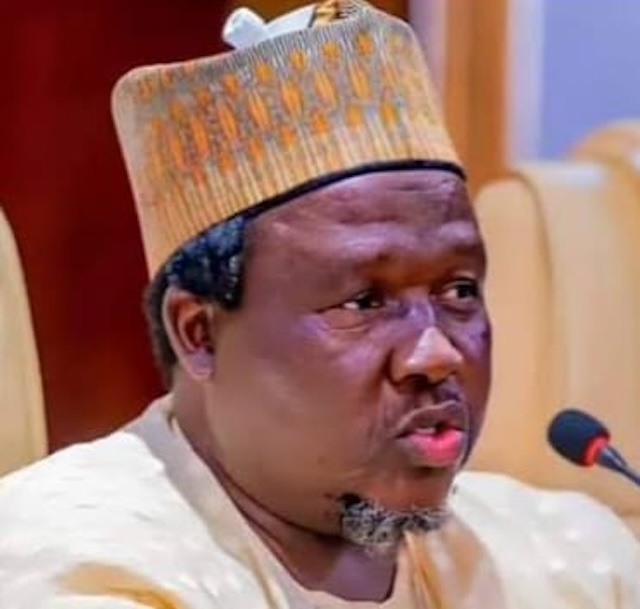
As a young Nigerian involved in TMS, I want a political culture based on facts, respectful discussions, accountability, and measurable results. If Masari’s political beliefs focus on results rather than empty words and sincere discussions instead of exaggerated claims, then we should pay attention to those ideas.
When the Tinubu Movement for Sustainable Governance Foundation, better known as Tinubu Must Stay (TMS), launched its national leadership in Abuja, I took on the role of its National Youth Leader. This was not just an appointment for me. It raised a bigger question about the political culture young Nigerians are stepping into.
The Foundation has a structure that includes a Board of Trustees, National Coordinators, and six directorates aimed at engaging citizens and communicating based on facts. It is led by Kashifu Inuwa Abdullahi, who is the director-general of NITDA, while Dr. Benjamin Obi Nwoye is the national coordinator for the South. Marcel Ngogbehei, a former Obidient coordinator, was named director-general, and Engineer Ibrahim Uba is in charge of mobilization and data management.
At the launch, Kashifu Inuwa Abdullahi stressed the need to simplify government reforms, connect data to daily life, and tackle misinformation using technology, town halls, and grassroots efforts. Benjamin Obi Nwoye echoed this, saying many government actions are poorly communicated.
Since then, one question has stuck with me: What values should shape the politics that young Nigerians will inherit?
This conversation naturally brings me to Ibrahim Kabir Masari, who is a special adviser to President Bola Ahmed Tinubu on political matters. He is becoming a key player in the president's political strategy in the North.
During the APC Presidential Campaign Council launch in Abuja on 14 October, Masari reportedly urged party leaders to stop making exaggerated claims about votes. Instead, he said they should focus on measurable results at the state, ward, and polling unit levels. His message was clear: “Stop talking to yourselves and start talking to the people.” He also asked campaigners to explain the government’s work in areas like education, healthcare, economic reform, and infrastructure. He urged them to recognize challenges and avoid misinformation and hate speech.
This message is important because young Nigerians want more than just slogans. We want proof. We want to be heard. We want claims that we can measure against our own lives.
Masari’s political background helps us understand his approach. He has served as the national welfare secretary of the All Progressives Congress. In 2022, he was nominated to INEC as Tinubu’s temporary running mate before Kashim Shettima was chosen as the main vice presidential candidate. Masari stepped aside, saying it would allow Tinubu more flexibility to consider different interests. After the 2023 election, he was made senior special assistant on political affairs and later became a special adviser on political affairs.
But maybe the most telling sign of his growing political influence is the title he is now often called: “Wazirin Tinubu.”
President Tinubu has called Masari “My Waziri.” In the North, this title means a trusted adviser and shows a close relationship with leadership. Here, it is more about presidential trust than an official position.
But this is where admiration needs to be balanced with scrutiny.
The importance of being Wazirin Tinubu cannot only be measured by access to the president, titles, or public fame. It should be measured by what that access leads to.

A trusted political adviser is in a sensitive spot in government. He must understand the president’s goals while being aware of the concerns of party members, elected leaders, and citizens. He needs to know when to speak and when to listen, when to step in and when to hold back. This role requires wisdom, political maturity, and the ability to handle different interests. That is what he does in promoting and safeguarding the reputation of President Tinubu.
For Masari, having the president's trust is both a benefit and a burden. Influence opens doors, but it also brings responsibilities.
Recent reports have shown him as a key figure in northern politics and one of the president's closest associates there. Such influence will naturally face scrutiny, and it should. The closer a political adviser is to presidential power, the more the public has a right to know how that influence is used.
This is why I find his focus on measurable outcomes important. If political leaders tell campaigners to stop making exaggerated claims, communicate honestly, and talk directly to citizens, then these principles should also be the standard by which their own influence is judged.
For those of us wanting to boost youth engagement in public issues, this distinction is vital. Young Nigerians should not be introduced to a political culture where being close to power is the main achievement. We should be shown a culture where access brings a duty to address problems, listen to hard truths, and help the government understand citizens beyond political flattery.
Evidence-based politics should not only mean sharing successes. Credibility also means recognizing failures. A real talk about government must allow space for what worked, what didn’t work, and what still needs fixing. Otherwise, “evidence-based communication” might just become another fancy term for political marketing.
This is perhaps the deeper meaning of the Waziri title. Good advice is valuable when it tells power what it needs to know, not just what it wants to hear.
Ibrahim Kabir Masari is now in a position where political relationships can be formed and disagreements can be resolved. His role as one of Tinubu’s key northern political figures makes his choices important.
The real question is not how close Masari is to the president. It is what that closeness does for governance and political engagement.
As a young Nigerian involved in TMS, I want a political culture based on facts, respectful dialogue, accountability, and measurable performance. If Masari’s beliefs truly rest on results over talk and honest dialogue over inflated claims, then those ideas deserve our attention.
But they also deserve to be applied consistently. Because the more influence one has, the greater the responsibility. And for Wazirin Tinubu, that may ultimately be the true burden of presidential trust, which he has handled well so far.


Comments
No comments yet.