The Tragic Death of Toluwanisings and the Social Media Backlash
Toluwanisings, a gifted Yoruba gospel artist, died unexpectedly, leading to significant social media reactions. His music and legacy continue to resonate.

My eyes are wet as I write this. I spent most of the morning listening to one of the songs of the talented Yoruba gospel musician, Olayemi Bayonile Bolaji, known as Toluwanisings. The 34-year-old was a true talent, a gift to our ears. Toluwanisings was like a nightingale, a special voice for sacred music. The nightingale holds a special place in Yoruba bird symbolism. In our culture, it is known as Àwòko, the best soloist of the forest, blessed with a beautiful range of sound.
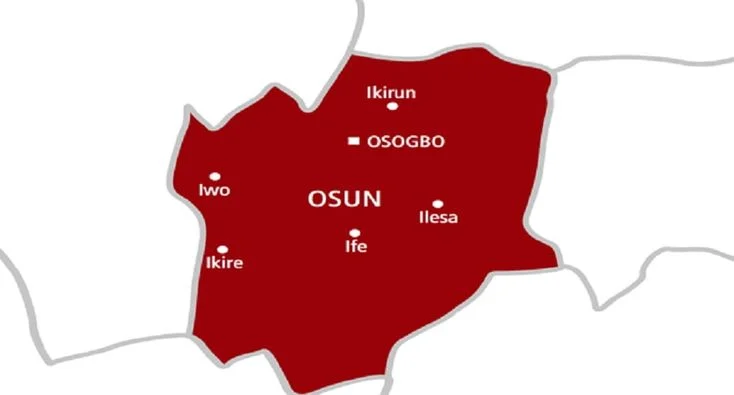
This human nightingale came from Ikirun, Osun State, a town that also hosts Akinorun Grammar School, where I had some memorable times during secondary school. Toluwanisings passed away suddenly a few weeks ago, on 14 October, after collapsing on the stairs of his home in Ibadan, Oyo State. He had just returned from an exciting worship concert called In His Presence.
The noise surrounding his sudden death is huge, troubling, and very telling. It reminds me of the old Swahili saying: when a monkey is destined to be caught by a wild cat, every tree it climbs becomes slippery. How can a man who sang so boldly about overcoming mockery and the arrogance of hypocrites suddenly become a victim of these very evil forces just a month after his death?
In one of his songs that brought tears to my eyes, he sang with powerful hope: “The plans of the enemy will not succeed against me/Satan will never celebrate my life/The heavens will not regret lifting me up/My light will not be covered by darkness/I saw Satan fall like lightning/The dragon was defeated by our testimony/Satan will not celebrate the downfall of a strong man/My giant will not shrink, as the Lord lives.”
I translated these heart-wrenching lyrics from his Yoruba version: “Ero ọta ko ni ṣe lẹ mi l’ori/Inu Satani ko ni dun l’ori aye mi…/Ọrun o ni k’abamọ p’ohun gbe mi ga…/Imọlẹ mi ko ni wọ l’okunkun.../Emi ri Satani to ṣubụ bi mọnamọna/A ṣegun Dragoni nipa ọrọ ẹri ẹnu wa/Satani ko ni s’ajọyọ p’alagbara ṣubu/Omiran mi o ni d’arara b’Oluwa ti ń bẹ.”
But now, it seems that the very plans Toluwanisings prayed against have surrounded him like a snake. The unseen demons seem to be celebrating his death, while those who should have defended his memory, including family members, are trying to paint him as a lesser person in public. On the day Toluwanisings died, every path led to the imagined blood the wild cat spilled from the monkey. The monkey's famous tree-climbing skills became useless in no time. Those who were wise became foolish, and those who were celebrated became vulnerable.
Family Conflicts Amid Grief
Toluwanisings’ death and the social media drama that followed confirm the wisdom of our elders: if the monkey cannot find trees to climb, it becomes as helpless as any ordinary animal. Ancient Yoruba wisdom states: “Bi igi o ba sunmọ igi, ọmọ ẹdun a d’ope”, when trees are not close to one another, the young monkey loses its skill and becomes foolish.
Before we can think about Toluwanisings’ sad drama after his death, we need to look at the terrible events of his last hours. It was a familiar Nigerian tragedy: the gospel star collapsed at home; he didn’t get medical help in time, and Àwòko flew away, taking his beautiful voice with him.
For many years, Nigeria has struggled with the problems of hospital emergency services, poor care and outright refusal, which have taken many talented individuals from us. Another issue is that hospitals often refuse to treat emergency cases without police reports. Together, these create a cruel system that sends people to early graves.
Reports say that as Toluwanisings struggled for breath after collapsing, he was taken to about seven to eight hospitals in Ibadan, including the University College Hospital (UCH). Each hospital either turned him away or gave different excuses. They passed the dying musician around like a game of medical hot potato until he finally passed away.
Social media exploded with anger and harsh questions. The silence of Àwòko caused a huge outcry online, as people criticized Nigeria’s broken health system. They revived the painful saying: May Nigeria never happen to us.
But as soon as Toluwanisings closed his eyes for the last time, the talk shifted from the health system that failed him to a nasty examination of his personal life. The uproar and pointless media talk after Toluwanisings’ death sound absurd. They remind us of the dark drama that followed the death of Ilerioluwa Oladimeji Aloba, known as Mohbad, in 2023.
Mohbad was just 27 years old when he died on September 12. His death caused a wave of controversy, from claims of bullying in the Lagos music scene to disputes over his baby’s paternity and family fights over his estate. For years, his body stayed in the morgue, delayed by family arguments played out on social media.
The Mohbad situation reminded me of the many years it took to bury Asipa Oyo, Amuda Olorunosebi, who was brutally murdered on November 26, 1992. His body was found defiled with acid, and he lay unburied for seven years until November 26, 1999. This is not just a saying; it reflects how the Yoruba view the earth as a sacred and living entity connected to the divine. The earth is seen as a protective cover for the secrets of those who have passed away.
Instead of allowing the earth to cover Toluwanisings after he died, his family from Ikirun started attacking his memory. For weeks, they tried to portray him as an ungrateful son who abandoned his father and lived a hypocritical life.

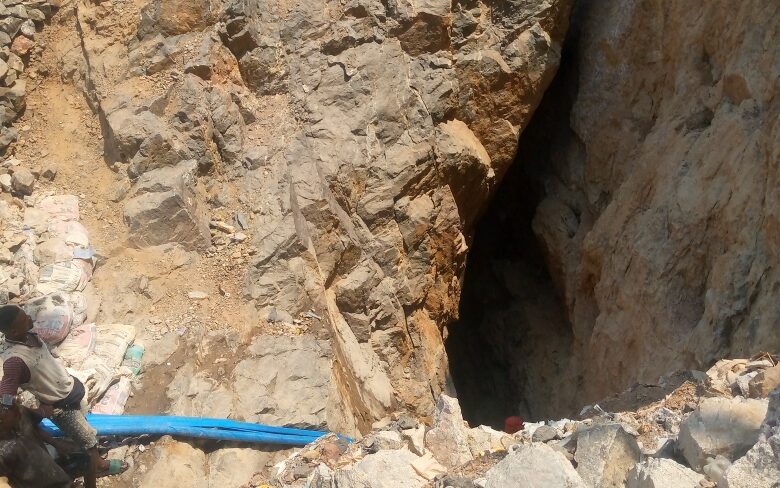
In the heat of this online fight, the question of where to bury him turned into a public war. His wife wants a quiet burial in a modern place, but his father and family want him buried either in his new house in Ibadan or beside his late mother in Ikirun, warning that otherwise, Irẹlẹ, the local deity, would strike. They showed no concern for Toluwanisings’ young wife and two daughters, only their own pride. The situation has turned messy and ridiculous. A man who spent his life making music to heal became a piece of bone fought over by dogs.
The Global Pattern of Posthumous Disputes
If we look beyond our local sadness, we can see that this kind of prideful behavior is not just a Nigerian problem. Throughout music history, the bodies and legacies of great artists often go through similar paths of greed and family conflict.
Consider my musical hero, Winston McIntosh, better known as Peter Tosh. I switched from his friend Bob Marley to Tosh when I discovered Tosh's deeper poetry and philosophy. My apologies for digressing. Peter was a key member of The Wailers, and after his death, he was recognized with a posthumous Grammy. He was shot during a robbery on September 11, 1987, and his funeral planning quickly turned into chaos, filled with family and political conflicts.
As they prepared his body, two men emerged claiming to be his father. One, Alfred McIntosh, was supported by Tosh's common-law wife, Marlene Brown. The other was James McIntosh, confirmed by Tosh's mother. A fierce battle broke out over where he should be buried. Brown insisted on her right to manage the funeral, while his mother wanted him buried in their home parish. The Jamaican government handed the body to his mother because it did not recognize common-law marriages.
Tosh's funeral turned into a riot. As a Rastafarian who criticized state hypocrisy, the attempt by the government to run his funeral caused protests. How could the same government that hunted him down now pretend to mourn him? His Rastafarian friends turned the funeral into a loud protest. In an odd twist, a self-proclaimed prophet even tried to command Tosh to rise from the dead during the service!
Similarly, the tragic end of Apala music legend, Ayinla Omowura, in May 1980 led to a battle over his legacy. Omowura, known as the nightingale, was stabbed in a bar fight. Although he was a Muslim, he often ignored his prayers. After his death, his local Islamic clerics refused to perform the funeral rites, calling his lifestyle un-Islamic. Only after elders reminded them of his financial help to their mosque did they agree to perform the rites.
The Western world has its odd examples too. Elvis Presley and James Brown both had chaotic situations surrounding their deaths. When Presley died on August 16, 1977, he was buried in a mausoleum. Shortly after, thieves tried to steal his body for ransom. His body had to be moved to a more secure location.
When James Brown died on Christmas Day in 2006, there were months of disputes over his body as his children fought over his estate and burial plans. The most bizarre case was that of Gram Parsons, who died from a drug overdose in 1973. He had made a pact with his road manager to be cremated in the desert. When he died, his stepfather tried to take his body for a burial in Louisiana. His friend stole the body and burned it in the desert, but ended up facing a light fine in court.
What these stories show is a troubling truth: society is often unfair in how it treats artists after they die. When musicians are alive, we enjoy their talents and often exploit their weaknesses. But once they pass away, we strip them of their dignity. The living rush to take their property, spread rumors, and judge them while turning their pain into cheap entertainment.
Toluwanisings spent his short life creating songs that comforted many. He sang about overcoming mockery and light breaking through darkness. Yet in death, he became trapped in the very noise and belittlement he fought against.
These are my questions for Toluwanisings’ uncle, who has become the loud social media figure fighting over where he should be buried: Does he understand that once breath leaves the body, it has no more value than a piece of wood? Why care more about a piece of wood than about the living?
Whether Toluwanisings gets buried in a grand tomb like Michael Jackson or a simple grave like that of President Umaru Yar’Adua, it won’t matter in the end. In a few days, the body will decay. Why add more pain to a widow who will wake each day to see a grave that was once her lively husband? If the family needs to sell Toluwanisings’ house to pay for his children's education, does this uncle understand that using the house as a burial site could lower its value? The truth is that the family is stuck in old views, seeing women as unworthy of inheritance, especially since she might remarry.
We must learn to let the dead rest in peace. The departed cannot speak for themselves or defend against the claims of relatives or social media critics. It is time we let the earth do its sacred work of covering the secrets and flaws of the deceased quickly, allowing their art, not their human weaknesses, to echo into eternity.



Comments
No comments yet.