New Pathway Adopted as Biodiversity Talks Wrap Up
The Yerevan Pathway was adopted at the UN biodiversity talks, aiming to tackle global biodiversity loss and improve conservation efforts.

After over two weeks of talks, countries involved in the United Nations Convention on Biological Diversity (CBD) have approved several decisions to tackle global biodiversity loss. This includes the adoption of the Yerevan Pathway.
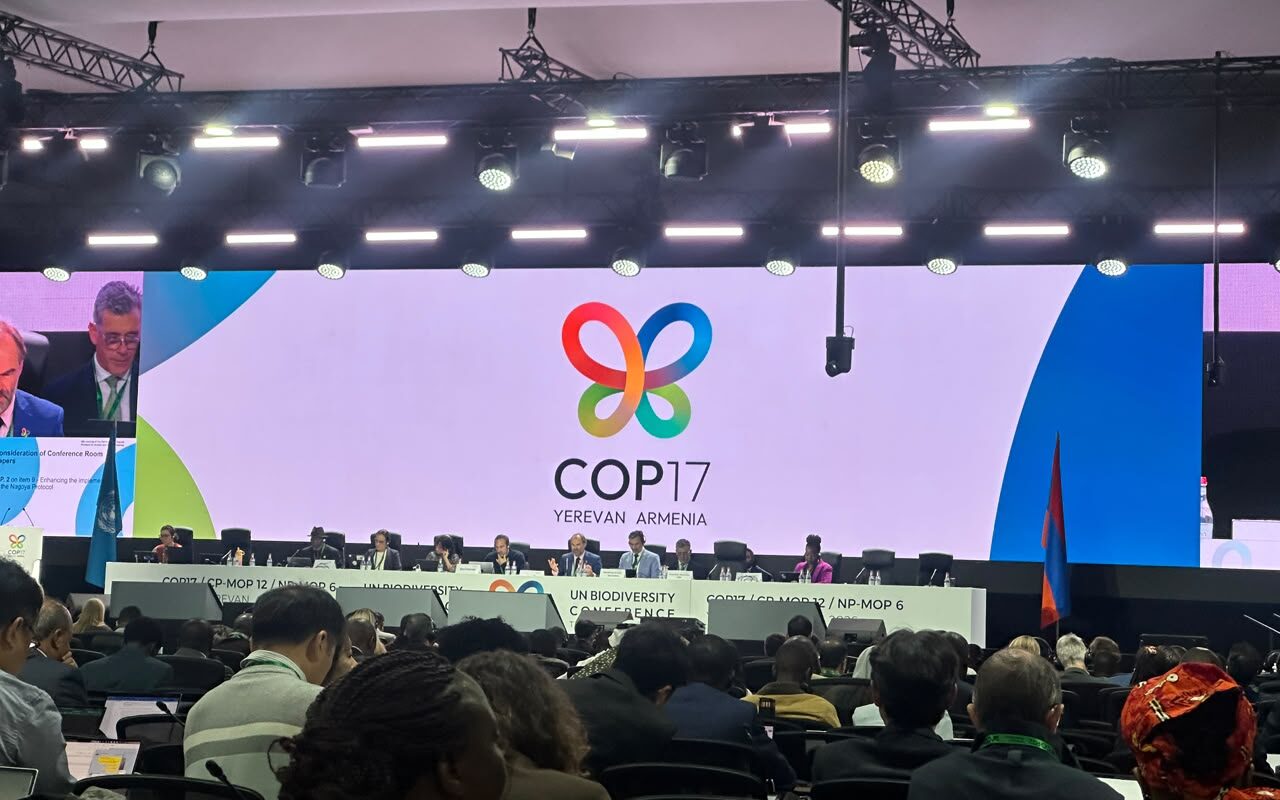
The Yerevan Pathway was accepted during the final session on Saturday, 31 October. This came after discussions that were supposed to end on Friday but were extended by another day.
The adoption followed weeks of intense discussions among countries on many issues. These included benefit-sharing, funding for biodiversity, harmful subsidies, rights of Indigenous Peoples, and conservation of marine life.
In a statement about the conference's end, the CBD Secretariat said the 2026 UN Biodiversity Conference made decisions that would help advance the Convention's work in science, technical areas, and implementation efforts.
"One major outcome was the Yerevan Pathway, a negotiated response to the first review of collective progress in implementing the Kunming-Montreal Global Biodiversity Framework (KMGBF)," the Secretariat said.
The conference began on 19 October and included the 17th Conference of the Parties to the CBD (COP17), as well as meetings for the Cartagena Protocol on Biosafety and the Nagoya Protocol on Access and Benefit-sharing.
The global review at COP17 was a stocktaking based on evidence from the State of Biodiversity Action report. This report was released shortly before the conference.
The report showed that the world is not on track to meet the Framework's 23 targets by 2030. This highlights the urgent need for governments to speed up their efforts.
Negotiations faced disagreements on several key issues. Russia was often accused by observers and other countries of trying to block or weaken proposals on Indigenous rights, biodiversity conservation on the high seas, and harmful subsidies.
These disagreements caused some tension among negotiating groups, with some countries feeling frustrated over attempts to weaken proposed commitments.
According to the UN, the Yerevan Pathway offers a common response to the global review findings. It identifies key areas for action through 2030 and where faster progress is needed.
These areas include stopping nature-harmful subsidies, boosting financial and technical support for developing countries, aligning national budgets with the KMGBF, and improving monitoring and reporting mechanisms.
The conference also produced decisions, new financial commitments, and initiatives to remove barriers to action, gather resources to close the biodiversity funding gap, and strengthen conditions that turn global commitments into real actions.
"Over these two weeks, we have shown that differences can be bridged, commitments can turn into decisions, and cooperation can lead to results," said COP17 President, Hambardzum Matevosyan.
"With the adoption of the Yerevan Pathway, we show our collective determination to tackle one of the most urgent challenges of our time. It sets out priorities for action, including implementing national plans and mobilizing financial resources," he added.
In addition to the Yerevan Pathway, countries agreed on several scientific and technical matters. These included protected areas, forest biodiversity, wildlife management, and managing invasive species.
CBD Executive Secretary, Astrid Schomaker, said the next four years will be critical for speeding up implementation of the global biodiversity framework.
"The next four years must bring acceleration and alignment with what we agreed when we adopted the Kunming-Montreal Global Biodiversity Framework," she said.
"We know what needs to change. We cannot protect nature while continuing to fund its destruction. Resources must reach the countries and communities that need them. And biodiversity must become part of daily economic decisions.
"In the end, the test is not what governments agreed in Yerevan, but what they change when they return home."
Gaps in financing, harmful incentives, limited access to technology, lack of data and knowledge, and insufficient involvement from government and society are major obstacles to implementing the global framework.
Key Outcomes from the Conference
The conference produced several decisions, financial commitments, and initiatives to address these issues, including a renewed focus on biodiversity education.
A key outcome was the agreement on the operation rules for a new permanent body on Article 8(j), now called the Sevan Guidelines. This decision aims to strengthen the role of Indigenous Peoples and local communities in shaping global biodiversity policies.
On financing, announcements included nearly $2 billion in new funding commitments related to biodiversity. This includes $560 million from the GEF-9 replenishment, $500 million from the Species Recovery Alliance, and over $330 million from the Value Nature Fund.
Other initiatives included an effort led by the presidency to reform harmful incentives and a new biodiversity bond launched by the Asian Development Bank. There was also a proposed model framework law on forests to enhance environmental enforcement.
The conference introduced new State of Nature Indicators and Metrics to improve monitoring and accountability in biodiversity.
Executive Director of the United Nations Environment Programme, Inger Andersen, said the conference moved efforts forward to turn the global biodiversity framework into real action.
"The world has already agreed on a global plan to protect nature," she said.
"This COP was about speeding up the implementation of the Kunming-Montreal Global Biodiversity Framework and turning targets into real-world results.
"In Yerevan, we saw countries come together, find a compromise, and agree on important decisions that will help real progress for people and the planet."
With four years left to meet the global biodiversity targets, attention now turns to putting into action the decisions made in Yerevan. The Yerevan Pathway is expected to guide national efforts until 2030, with progress evaluated based on policy changes and resource delivery.
The next Conference of the Parties to the Convention on Biological Diversity (COP18) is set for 2028 in Ecuador.
Mixed Reactions to COP17 Decisions
Despite adopting the Yerevan Pathway and other decisions, some conservation groups have criticized the outcomes. They believe the negotiations did not meet the ambition needed to tackle the global biodiversity crisis.
The Wildlife Conservation Society (WCS) said COP17 highlighted the global biodiversity crisis and the gaps that need to be filled to hit the 2030 targets.
However, they argued that the Yerevan Pathway and other results did not provide the stronger ambition needed to set the world on the right path.
Susan Lieberman, WCS Vice President for International Policy, described the conference as well organized but criticized the results as weak.
"COP17 was well organized by the Government of Armenia and provided a great platform for sharing, networking, and learning," she said.
"But the negotiations ended up weak on ambition. We are in a biodiversity crisis, and we need strong outcomes for wildlife and ecosystems, not just outputs and good speeches."
Lieberman said the conference should have marked a turning point by securing stronger commitments and funding to reverse biodiversity loss.
"Success needed governments to show political will and funding to reverse biodiversity loss. This means protecting and restoring ecological integrity and respecting the rights of Indigenous Peoples and local communities."
"With just four years until 2030, we cannot have another conference that only talks about the crisis without speeding up the solution," she said.
She did recognize the importance of the Kunming-Montreal Global Biodiversity Framework, calling it a vital global agreement.
"If all the targets are met, as promised by governments, nature will indeed be on the path to recovery. COP17 has clarified the challenge; now governments must show the political will and resources to meet it," she said.
WCS Director of International Policy, Alfred DeGemmis, also criticized the negotiations, calling the conference a setback after years of positive momentum on global biodiversity targets.
"This year's UN biodiversity summit felt like a crash after years of high hopes about global biodiversity targets. The politics that obstructed climate talks have also entered biodiversity negotiations, and finding bold actions will need leaders willing to take risks," he said.
WCS Assessment of COP17 Outcomes
In its assessment, WCS said the Yerevan Pathway offered a chance to address gaps in the global biodiversity framework's implementation but questioned whether the adopted text had enough practical measures.
They noted that the final decision mostly relied on previously agreed language and was unclear on specific steps to close the implementation gap.
However, they welcomed provisions on monitoring ecosystems and reforming subsidies, calling both critical for reversing biodiversity loss.
Regarding the 30×30 target, which aims to conserve at least 30 percent of the world’s land and sea by 2030, WCS noted gradual progress in terrestrial conservation and significant progress in coastal areas.
However, they emphasized that the goal must go beyond just increasing protected areas to ensuring they are effectively managed and produce real biodiversity outcomes.
They also welcomed the launch of the Yerevan Global OECM Action Hub, calling it a positive step towards advancing other effective area-based conservation measures.
This initiative must contribute to meaningful progress towards the 30×30 target alongside the expansion of protected areas.
On Climate and Biodiversity
WCS expressed disappointment that COP17 did not secure stronger measures to tackle the interconnected crises of climate change and biodiversity loss.
The organization sought better cooperation among the Rio Conventions and a roadmap for countries to coordinate their efforts on the Kunming-Montreal Global Biodiversity Framework and the Paris Agreement.
Although high-level events involving CBD COP16, UNCCD COP16, and UNFCCC COP31 highlighted the need for coordinated action, WCS said the formal outcomes were not enough.
They criticized the decision to encourage countries to apply voluntary guidelines on climate and biodiversity synergies, stating this would need more negotiations before COP18.
WCS described this approach as "kicking the can down the road," saying it did not meet the urgency required, especially as climate change continues to threaten biodiversity.
The first global review of the Kunming-Montreal Global Biodiversity Framework already showed the scale of the challenge. Even though countries have made progress in setting national biodiversity targets, less than half are on track.
Current commitments are also not enough to meet the 30×30 target, while gaps in financing, capacity, and data continue to hinder implementation.
This review has given governments a chance to reassess their commitments and speed up action.
The challenge now is whether countries will turn the decisions and commitments made in Yerevan into real policy changes, adequate funding, and measurable improvements in biodiversity conservation before the 2030 deadline.



Comments
No comments yet.