Nigeria launches initiative to support women in cross-border trade
The Nigerian government has launched the Making Trade Work for Women initiative to support women in cross-border trade. The program aims to tackle challenges they face.
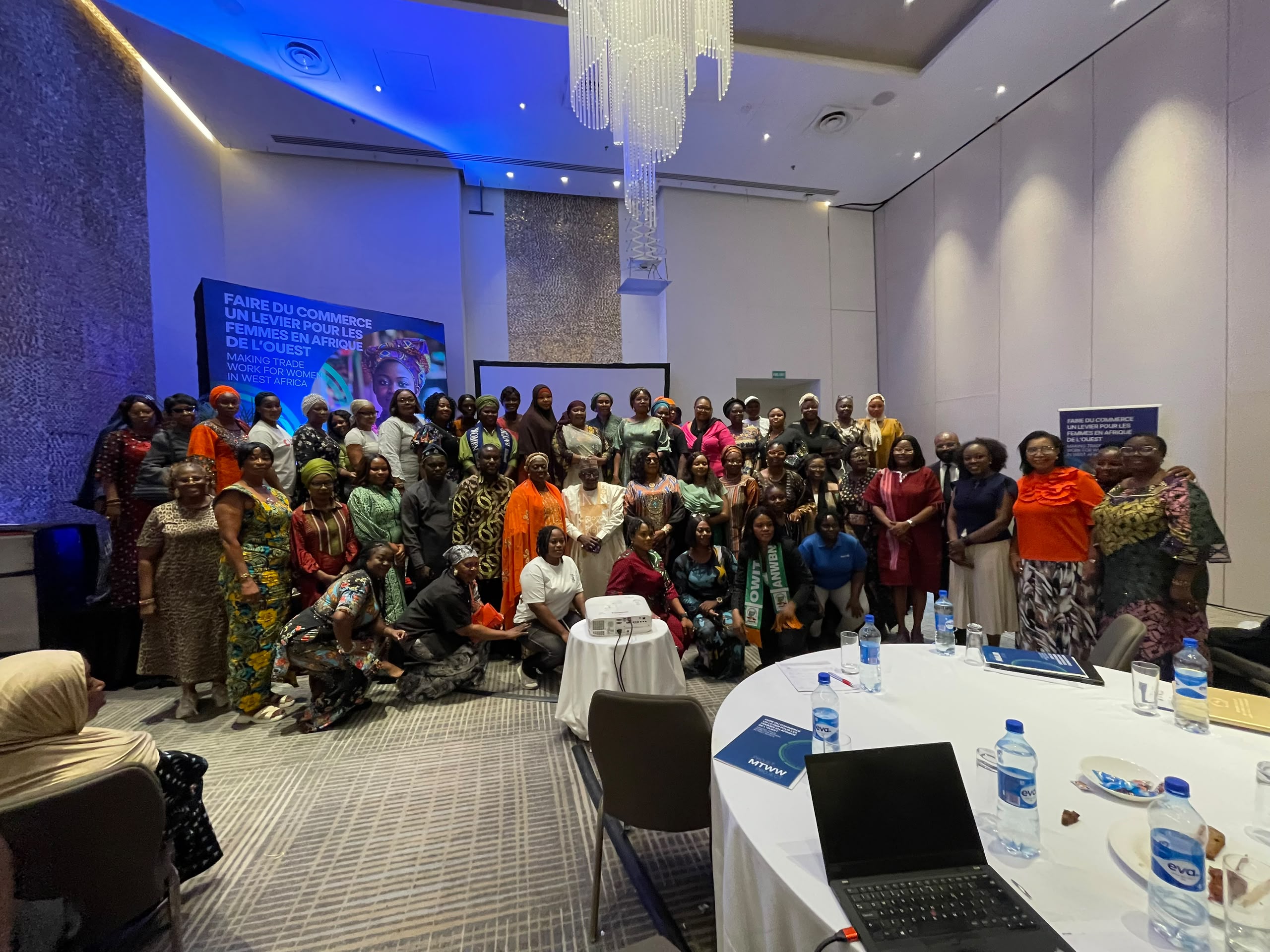
The Nigerian government and its partners have started the Making Trade Work for Women (MTWW) initiative. This program aims to help women who face challenges in cross-border trade.
The initiative wants to tackle issues like limited access to finance, unclear trade rules, harassment, and poor border facilities. It is led by the Centre for International Studies and Cooperation (CECI) and TradeMark Africa (TMA), with funding from Global Affairs Canada. The initiative covers Nigeria and five other countries: Benin, Burkina Faso, Côte d’Ivoire, Ghana, and Togo.
At the launch in Lagos on Thursday, Dayo Okewole, who represents the Federal Ministry of Industry, Trade and Investment, spoke about the project's goals. He said the program would help women face the challenges that stop them from benefiting from cross-border trade.
Mr Okewole noted that women make up over 70 percent of informal cross-border traders and are a significant part of small and medium-sized businesses. Despite this, they still struggle to access trade finance, deal with border security issues, and improve their digital and trade skills.
"Women are the bedrock of our economic architecture in Nigeria," he said. He added that the project would support making trade more inclusive and easier for women.
He mentioned that the ministry is dedicated to improving trade rules, cutting down on red tape, and ensuring transparency in trade policies. Mr Okewole highlighted that key areas for support include policy inclusivity, digital skills, and access to finance and markets.
The initiative will help women-led businesses boost their digital skills, use e-commerce, and develop the skills necessary to grow their markets. He also talked about plans to enhance facilities for women traders at border areas, including a mini-market where traders can exchange goods without having to travel back and forth across the border.
According to him, during a visit to the Seme border, he found that some facilities for women traders were not being used because of low awareness. "We are happy to see some of the steps that have already been taken by the Customs Command in addressing some of the challenges in that area," he said. He added that better information would help women use existing facilities and rules.
Kwamina Ekremet, TMA’s Country Director for Ghana and Anglophone West Africa, stated that the initiative seeks to make trade easier and more responsive to women's needs. He referred to the Organisation for Economic Co-operation and Development’s Sahel and West Africa Club, which reported that West Africa's intra-regional food trade is about $10 billion each year, but much of it is unrecorded.
Mr Ekremet said that women are central to this trade but often face barriers that make their businesses harder and riskier. "Our challenge, therefore, is not simply to encourage women to trade formally. It is to make formal trade accessible, affordable, predictable, and worthwhile," he said.
The program, running from 2024 to 2028, aims to directly assist 80,000 people, with at least 70 percent being women traders. It also wants to indirectly benefit about 20,000 more traders and reach over 50,000 people through awareness campaigns.
The goal is to raise the incomes of participating women by 40 percent and increase the number of women traders using sustainable practices by 50 percent. Mr Ekremet mentioned that meetings with border officials, customs staff, and small traders at the Seme border showed issues like too many checkpoints, unclear rules, identification problems, harassment, bad road conditions, and lack of access to essential facilities.
He shared the story of a trader, Madam Iyabo, who said a trip that used to take one day now takes three to five days. "Every additional day increases her costs, reduces her profit, and puts more pressure on her business and family," he said.
Mr Ekremet said these findings show the need for better trader education, simpler paperwork, better coordination among border agencies, and easier access to facilities for women. He added that the initiative would collaborate with the government and regional partners to promote safer border practices, strengthen women’s groups, and create better ways to report harassment.
After the launch, Sand Mba, Executive Director of the Africa International Trade and Commerce Research, which is leading the project, said the initiative would help tackle gender barriers, improve access to trade information, and help women benefit from existing regional trade agreements.
He mentioned that several policies support cross-border trade, including the African Continental Free Trade Area (AfCFTA) and the Economic Community of West African States’ (ECOWAS) Trade Liberalisation Scheme. However, Mr Mba pointed out that gaps in implementation and access to information still exist.
"There are great policies in place to support women in trade, but we struggle with implementation and accessing information to make these policies work," Mr Mba said. He called for stronger cooperation between the government and project partners to make sure women traders understand and can use available trade facilitation options.
A representative from the Bank of Industry’s Gender Inclusion Unit, Jelilat Ismaila-Ayinde, also spoke about financing options for women-owned businesses. She mentioned the bank’s Guaranteed GLOW for Women product, which supports women in sectors like light manufacturing and agro-processing.
Ms Ismaila-Ayinde said this product offers financing up to ₦50 million and requires just one guarantor. The bank plans to digitise the application process to improve access across the country. However, she noted that this product does not cover trading but encouraged women in eligible sectors to use the bank’s online application platform.
At the event, the president of the Lagos State Association of Pineapple Sellers, Omotola Durotola, shared the struggles of traders. She said women in cross-border agricultural trade find it hard to access producers, secure enough capital, and locate good markets. Many traders buy goods on credit because they do not have enough money upfront, while some sellers operate under bridges in Lagos due to poor market facilities.
The association urged for support to improve access to agricultural producers in the Republic of Benin, provide financing for traders, and develop better market infrastructure in Lagos.

Comments
No comments yet.