Nigeria's Rising Debt: Where's the Money Going?
Nigeria's domestic debt is increasing rapidly, raising concerns about transparency in public borrowing. Discover the implications for infrastructure projects.
Between 30 September 2025 and 31 March 2026, the domestic debt of the Federal Capital Territory (FCT) jumped from ₦78.93 billion to ₦389.88 billion, according to the Debt Management Office (DMO). This increase is about ₦311 billion in just six months, which is roughly ₦1.7 billion a day. The FCT Administration said this rise is due to more infrastructure projects. But there are no documents from the Administration or anyone else showing who lent the money, on what terms, or for which projects.
The FCT situation is extreme, but it's not unique. In Nigeria, loans are often announced, approved, and signed in public, usually with a ceremony. What happens to the money after that is rarely documented where everyday people can see it. In cases like the FCT’s, even the borrowing itself is hard to track. Nigeria borrows publicly but keeps the details private. Most public records stop at the approval stage.
That is not what the law says. Section 44(1) of the Fiscal Responsibility Act 2007 requires any government that wants to borrow to specify the purpose of the loan and present a cost-benefit analysis showing its economic and social benefits. If the purpose has to be stated before borrowing, there should be a record afterwards to show if those goals were met.
At the Center for Fiscal Transparency and Public Integrity (CeFTPI), we have started to create that record. The result is the Public Debt Integrity, an open database for Nigerian public borrowing and how that money is used. The project aims to improve accountability for public debts, so that every loan can be tracked from approval to what it was used to build. It includes foreign loans and domestic bonds from the Federal Government, the 36 states, and the FCT, linking every loan to the documents backing it. Where records are missing, the database will show that instead of guessing.
We will rely on the lenders’ records, including those from the World Bank and the African Development Bank (AfDB), as well as the DMO’s debt reports, bond and Sukuk offer documents, state budgets, audited accounts, and progress reports from the Federal Ministry of Works. Each loan will be assessed based on one main question: Does the public record show that the money was used for its intended purpose? A project counts as completed only when an independent official record confirms it. The word of the borrower alone is not enough.
Out of 448 foreign loans to the Federal Government, the 36 states, and the FCT amounting to $98.75 billion, only 138, which is 31 percent, have independent completion records. For 241 loans, or 54 percent, the use of the money is not clear, and 168 of those, worth $23.90 billion, are already finished. On the domestic side, it is even worse. Of the 601 projects listed in domestic bond and loan documents, only 26 have completion records. A low grade indicates a lack of evidence, not wrongdoing by any official. A loan marked as “INSUFFICIENT” might have been used well, but there is no proof.
The Shomolu General Hospital in Lagos shows what these gaps look like. A Lagos State bond document from May 2023 listed the hospital rehabilitation as a ₦18.0 billion project, but nothing has been paid and the work is 0 percent complete. The Series IV bond document from 20 November 2025 describes it as a ₦43.56 billion new hospital, with ₦12,001,840,630.57 recorded as paid so far, but the project remains at 0 percent completion. That same bond allocated an additional ₦4.89 billion to the project.
The total public debt is alarming. As of 30 June 2026, it was ₦166.79 trillion, up from ₦17.36 trillion at the end of 2016. Some of this increase came from converting ₦22.71 trillion in Central Bank Ways and Means advances in 2023, while others resulted from the naira falling. But most of the rest is from new borrowing. Ten states now owe more than a full year’s revenue. Kaduna’s debt is at 336.7 percent of its 2025 revenue, and only five states and the FCT are at or below the 50 percent guideline from the Fiscal Responsibility Commission based on DMO data.
At the federal level, a $399.5 million loan from the Export-Import Bank of China funded the National Public Security Communication System in Abuja and Lagos. The loan was fully disbursed and the network was installed in 2011. In July 2023, the Ministry of Police Affairs said the system has been inactive, partly due to vandalism, and will need to be concessioned for repairs.
On the Sokoto-Tambuwal-Jega-Kontagora-Makera road, the Ministry of Works records the commissioning and handover of Phases I and II on 25 November 2021. A month later, the 2021 Sukuk prospectus allocated another ₦1.5 billion to Section I of the same road. The prospectus does not clarify if this money was meant for payments on the completed work, and there are no later official records explaining this.
The Loko-Oweto Bridge between Nasarawa and Benue states was opened for public use in a virtual ceremony on 23 May 2023. A year later, the Federal Ministry of Works’ scorecard dated 27 May 2024 still showed the bridge and its approach roads at 95.19 percent completion. Both records are from the government. They cannot both tell the full story.
Some debts cannot be traced to loans at all. The DMO’s external debt report from 30 June 2026 lists $912.5 million on four lines that could not be connected to any published loan agreement, purpose, or terms. The biggest is the $835.78 million owed to the African Export-Import Bank (Afreximbank), which is up from $637.82 million three months earlier. Afreximbank did not have a line in the debt stock at the end of 2025.
There is also money raised without a list of projects. ₦550 billion of the Federal Government Sukuk, which includes the Works’ share of the 2023 issue and the entire 2025 issue, has no published list of the roads it will pay for. Investors who buy a Sukuk know what assets back it. Citizens who will pay it back should know just as much.
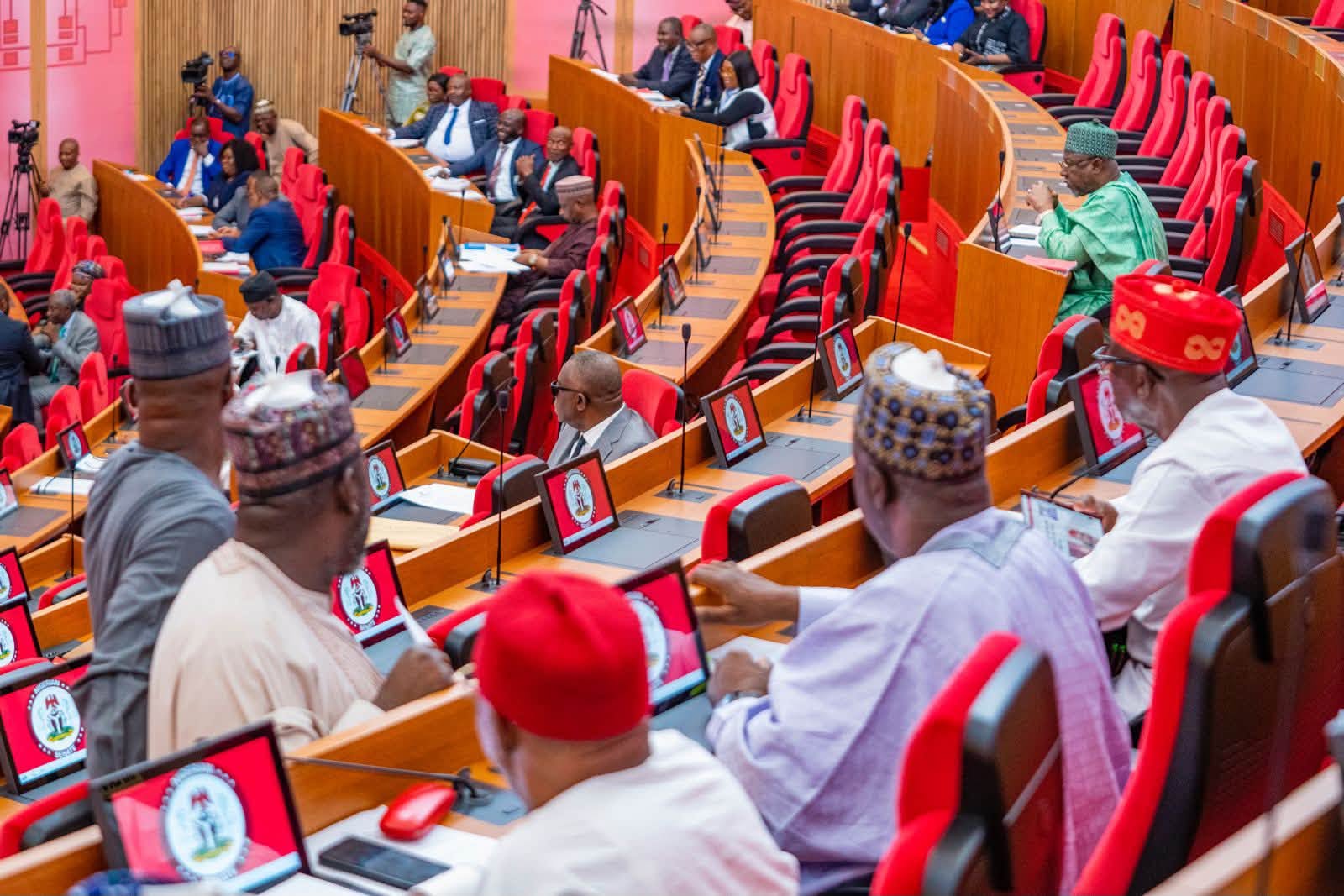
The National Assembly and the state houses of assembly should check what earlier loans achieved before they approve new ones. The Fiscal Responsibility Act already requires a stated purpose; lawmakers can reasonably ask if the last one was met. Nigeria will keep borrowing, like every country does. Borrowing in the name of the public comes with a responsibility to account to the public, and that responsibility does not end when the loan agreement is signed.
Comments
No comments yet.