Remembering Masussuka and His Call for Peace
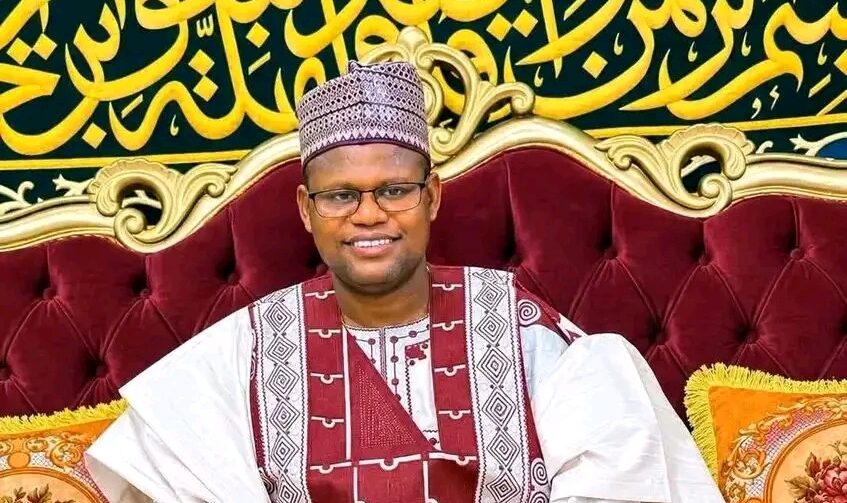
Sheikh Masussuka's call for peace resonates deeply as we mourn his tragic loss. His knowledge and dedication to faith inspired many.

He wanted us to discuss peace. He was killed before we could meet.
I am still in disbelief.
Last year, after reading some of my articles about him, Sheikh Yahya Ibrahim Masussuka got in touch with me. He later invited me to the National Peace Dialogue on 31 October. I could not go.
On Monday, he was assassinated.
Yesterday, people gathered for his burial in a way I haven't seen in Katsina for years. Today, different religious groups showed up for the dialogue he had organized.
The guests arrived. The man who invited them was already buried.
I keep thinking about that.
My fondness for Masussuka comes from my background. Our father was a scholar and a reciter of the Qur’an. Wherever I have lived, I have been drawn to those who study and reflect on the Book.
Masussuka’s knowledge amazed me: His memory, his ability to trace words and verses in the Qur’an, his understanding of the Hadith literature he often questioned.
How could I not be interested?
I did not agree with everything he said. Do we have to agree with everything someone says to respect their knowledge or defend their right to live?
Over the years, many people have shared their struggles with faith privately with me. They had questions they could not ask at home. They could not express doubts among friends. They feared acknowledging contradictions.
Scaring people into silence does not erase their questions. It teaches them to hide.
Faith is a personal journey. People reflect, struggle, learn and reconsider. Young people need space to explore that journey without every question seeming like proof they have abandoned Islam.
Masussuka provided some of that space.
You could hear him examine a narration in Bukhari or Muslim. You could consider an idea without having to accept it. You could disagree and still come back to listen.
In an environment where asking the wrong question can make you a target, that is very important.
I recognize this control of thought from different times in my life: criticism of a book I brought to primary school, even when it was read on the radio; being excluded in secondary school for saying that preachers told us the national anthem was un-Islamic; and facing backlash for teaching evolutionary biology later on.
Today, my own brother gets threats for questioning religious ideas online.
So this fear is personal.
Ask a question and people start investigating whether you are still a Muslim. Defend someone’s right to ask it and you become suspicious yourself.
Now, even mourning a murdered man raises questions about your faith.
Some have come to my posts to insult me or mock his death. I have blocked them. Disagreement is fine; I am not obligated to accept cruelty while mourning.
Masussuka answered many questions at once and raised many of his own.
Ga fili, ga mai doki. Here is the field. Here is the horse. Let the contest begin.
He could be sharp. His humor could sting. People had every right to dislike his style, challenge his views and point out any mistakes they found.
His right to live did not depend on winning an argument.
That is why celebrating his death has been so troubling.
I have seen people mockingly ask how he should be buried if he questioned the Hadith, since the burial rites are not detailed in the Qur’an.
A man has been killed, and you show up with a theological joke.
What exactly do you think you have proven?
You may think he was wrong. You may have found him offensive. But when his murder makes you happy, you need to look at your conscience.
You may not have been involved in the killing. Yet celebrating it shows approval. It tells others that violence can get you what you want.
And young people are watching.
They are learning whose suffering deserves compassion and whose death can be entertainment. They are learning how we react when someone asks questions we cannot handle.
We cannot reward cruelty and then act surprised when it goes further.
The threats also reached Masussuka’s followers and supporters. This spreads fear beyond just one person. People start thinking about whether sharing a video, expressing sympathy or asking a similar question could put them at risk.
A society cannot think freely in such an environment.
The effects go beyond religion. When questions become dangerous, mistakes are harder to fix. Young people hide their thoughts. People with valuable ideas pull back. Old explanations remain because challenging them costs too much.
Then we wonder why we struggle to move forward.
We need a society where faith allows for open-mindedness. Where people can have different views and still be safe. Where we can question our beliefs and communities, including my own.
We must protect that freedom even when the person asking the question annoys us, challenges our teachers or reaches a conclusion we find deeply wrong.
The crowds at his burial and the attendance at today’s dialogue remind me that cruelty does not speak for everyone. Many are grieving. Many are upset. Many see the worth of the space he created.
Seeing people from different religions come together today was uplifting. Their presence showed the unity he stood for. It gave some hope in a week that has been lacking in it.
But I am still mourning the man. His knowledge. His humor. The conversations we will never have.
He achieved so much before turning fifty. There should have been more time.
He invited us to talk about peace. The least we can do in his memory is to make it safer for the next person with a question.
Allah ya jikan Malam
لَا إِلَٰهَ إِلَّا اللَّهُ




Comments
No comments yet.