UNIJOS Fails Students with Disabilities in Hostels and Facilities
Monica Joseph struggles to access basic facilities at UNIJOS due to inadequate support for students with disabilities. The conditions in hostels and classrooms are alarming.
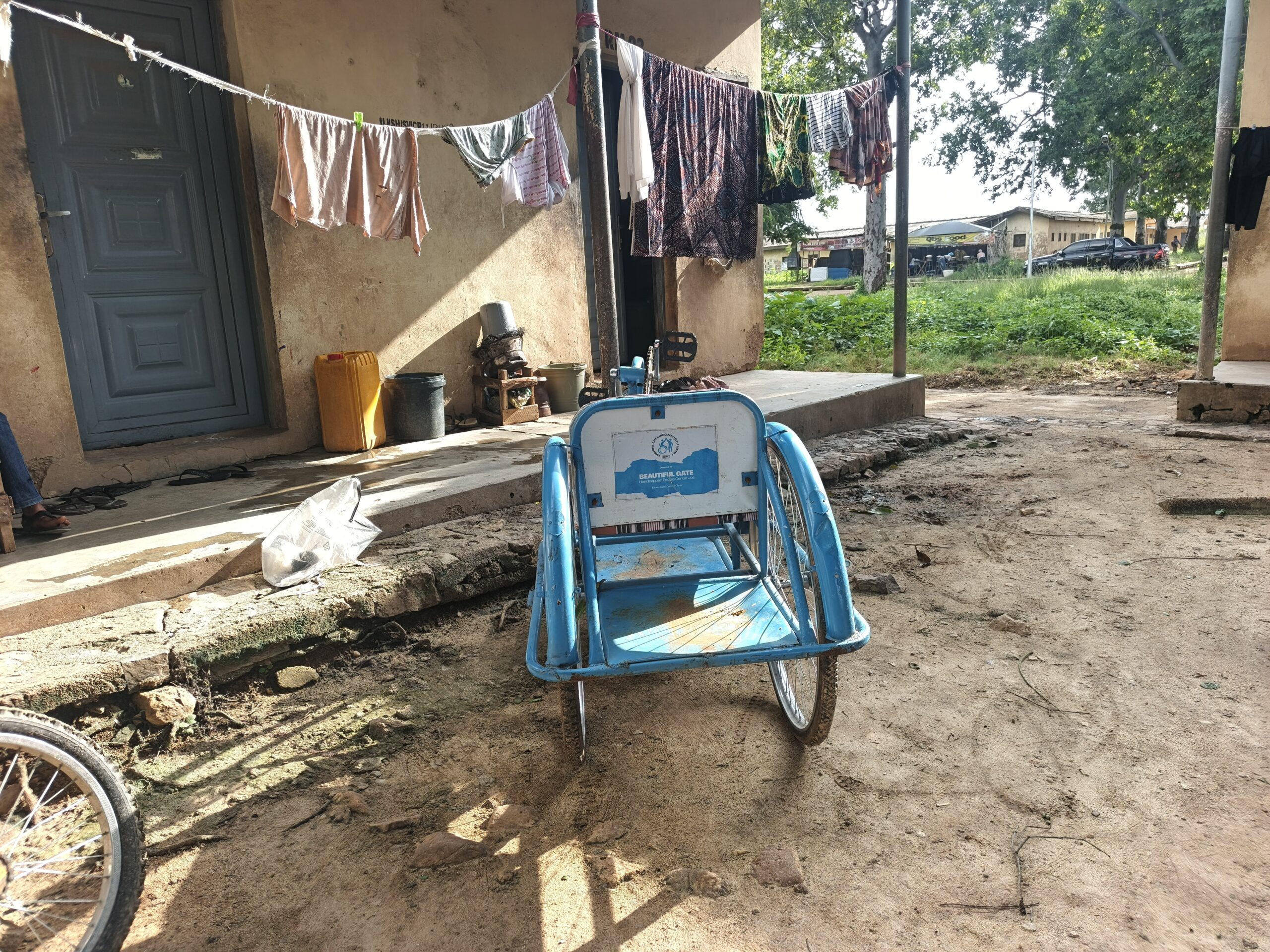
Monica Joseph* faces a tough time getting to the bathroom in her hostel at the University of Jos. She crawls on her hands and knees because there is no ramp or support for her wheelchair.
"I become even dirtier after coming out of the bathroom," she said.
Things get worse during the rainy season. Water collects around the hostel, and she has to crawl on the wet ground to enter or leave. Her wheelchair stays outside, sometimes getting soaked in the rain.
The Village Hostel, where students with disabilities stay, was built in the mid-1980s. Other old hostels like Abuja Hostel were also built around that time.
During a visit to the hostel in September, PREMIUM TIMES noticed the bathroom was old and not well-kept. There were no ramps, grab rails, or other features to help wheelchair users.
The toilet area was dirty and had a strong smell, with human waste visible in parts of the facility.
The challenge does not stop at the bathroom door. Ms Joseph lives in a compound filled with bushes, where uneven ground, stones, and potholes make it hard for wheelchair users to move.
Some paths in the hostel are hard or impossible to use alone. Some rooms and areas are not accessible because they lack ramps.
While Ms Joseph spoke with the reporter, a visually impaired student fell while trying to fetch water in the compound.
Classrooms are not better
The problems continue in the lecture halls and classrooms, especially in the Faculty of Education. Most classrooms do not have features to help people with disabilities move around freely. The layout of many classrooms does not support students with mobility issues.
Without these facilities, students must rely on their non-disabled friends to move around campus and get to their classes. This dependence has become part of their everyday lives at the university.
Patrick’s repeated falls
James Patrick*, a visually impaired student, shared a story from 2025 when he fell while trying to cross a bridge on his way to school.
"I fell off the bridge because there was no guide to show me the safe path. A woman passing by raised the alarm, and other students came to rescue me," Mr Patrick said.
Legacy and accessibility gaps
The University of Jos trains professionals in special education. This program started in 1978 as part of Educational Psychology and later became a full department.
The Bachelor of Education program began in September 1981 to train special education teachers in Nigeria. Today, the Department of Special Education and Rehabilitation Sciences offers various undergraduate and postgraduate programs.
The department also has a resource room for students with visual impairments across the university. They provide services like braille transcription and audio recordings of learning materials.
These services aim to help students with visual impairments take part in classes and access course materials. But reports from students and observations by PREMIUM TIMES show the struggles of making education inclusive.
The law and its limits
The Discrimination Against Persons with Disabilities (Prohibition) Act, 2018, took effect on 17 January 2019. This law bans discrimination based on disability and guarantees access to the physical environment.
Section 3 of the Act gives persons with disabilities the right to access buildings and environments on equal terms. Section 4 requires public buildings to have accessibility features like ramps and lifts.
The law allowed existing public buildings a five-year transition period to make necessary changes. That deadline ended in January 2024. The Act also covers education and mandates public schools to be inclusive and accessible.
Paying for what does not exist
Students at the University of Jos pay various fees, including a facility improvement fee. One student shared a fee breakdown that included ₦5,000 for facility improvement and ₦30,000 for utilities.
Though the facility improvement fee is not only for hostels, it raises questions about what improvements students see, especially those in Village Hostel, where they pay about ₦24,000 each session.


The university’s fee structure has stirred controversy. In July 2023, UNIJOS suggested increasing undergraduate fees from about ₦45,000 to ₦213,050 for new students, while those in 300 level and above were set to pay ₦160,000.
This proposal led to protests and discussions with the Students’ Union Government, resulting in a revised fee structure. Students now pay between ₦130,000 and more than ₦200,000, depending on their department.
UNIJOS reported screening 8,218 students for the 2023/2024 academic year, registering over 10,600 in 2024/2025, and enrolling 8,828 students, including 75 foreign students, for 2025/2026.
The estimated ₦138.23 million collected for facility improvements over three years raises questions about how this money was spent and what improvements were made.
For students with disabilities like Ms Joseph and Mr Patrick, the concern is clear: if they have been paying for facility improvements, why do basic barriers to safe movement and sanitation still exist?
Management silent
PREMIUM TIMES reached out to the Dean of Student Affairs, Chris Piwuna; the Vice-Chancellor, Tanko Ishaya; and the university’s spokesperson, Emmanuel Madugu, for their comments on these issues.
The newspaper sent messages to Messrs Piwuna and Ishaya detailing the findings at Village Hostel and other facilities, along with questions about the use of student fees and planned renovations.
Mr Piwuna declined a call and read the message without responding. Mr Ishaya has not replied either.
Mr Madugu acknowledged the observations in a message and said he would seek feedback from the relevant departments. But further calls to him went unanswered, and he has not given more information.
SUG raises concerns
The President of the Students’ Union Government (SUG) at the University of Jos, Younglan Talyoung, confirmed the bad conditions at Village Hostel, home to students with disabilities.
He said the union has written to the university management several times asking for improvements. He described the hostel environment as not suitable for anyone, let alone students who need accessible facilities.
Mr Talyoung said the union assessed the hostels and sent a detailed letter to the vice-chancellor about the issues, including leaking roofs, poorly kept toilets, and uneven surfaces that flood during the rainy season.
"There is a waterlogged area during the rainy season. The water floods right into their rooms," he said.
He added that the union had raised these issues multiple times, but real changes are still not seen.
Disability commission keeps mum
PREMIUM TIMES tried to contact Ayuba Gufwan, executive secretary of the National Commission for Persons with Disabilities (NCPWD), about the accessibility problems at the University of Jos.
The newspaper sent messages about the investigation and asked for an interview on the commission’s role in enforcing disability rights and the university’s responsibilities under the 2018 Act.
PREMIUM TIMES also called Mr Gufwan, but the call was declined with an automated reply saying, "I am so sorry, I can’t answer the phone right now. How can I help you?"
After a follow-up message, he apologized for missing the calls and suggested they talk later. A proposed call at 5 p.m. went unanswered.
He has not answered the questions about how the commission could hold public institutions accountable for accessibility failures.
Aluta without victory
While the university management stays quiet, Ms Joseph, Mr Patrick, and many other students with disabilities at UNIJOS continue to face poor living conditions. Some must stay awake at night when rainwater floods their rooms in Village Hostel.
Nigeria’s Discrimination Against Persons with Disabilities (Prohibition) Act, 2018, guarantees access to public buildings. This report raises serious questions about how the university is meeting those obligations.
For an institution that claims to value "Discipline and Dedication", the conditions described in this report reflect a troubling situation.




Comments
No comments yet.