2027 Presidential Race: Candidates Ramp Up Campaigns with Promises
The 2027 presidential race is heating up with candidates making bold promises on key issues. President Tinubu seeks re-election while Atiku, Makinde, and Obi present their plans.
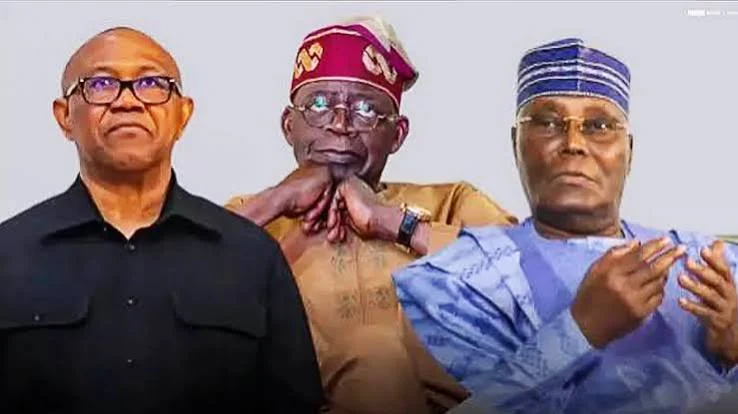
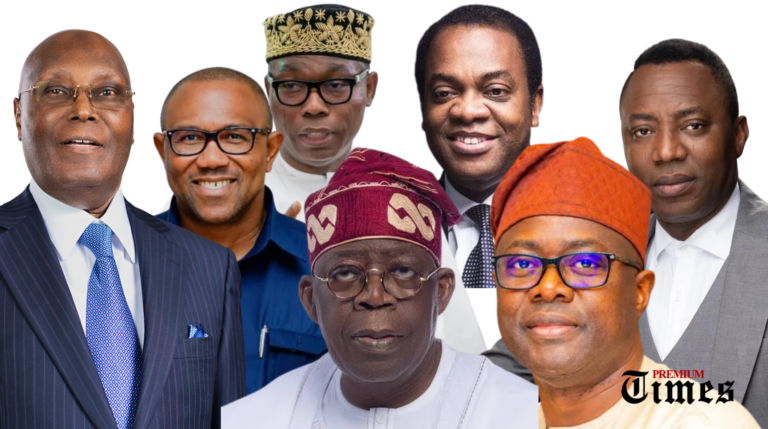
The presidential race on January 17, 2027 is heating up as President Bola Tinubu and opposition candidates Atiku Abubakar, Seyi Makinde, and Peter Obi ramp up their campaigns, making promises on security, economic recovery, national unity, and better living conditions.
Tinubu is asking for another four years, highlighting his administration's successes and promising to continue his policies. In response, the opposition candidates are criticizing the current state of the country and offering their own plans to address the growing economic and security issues.
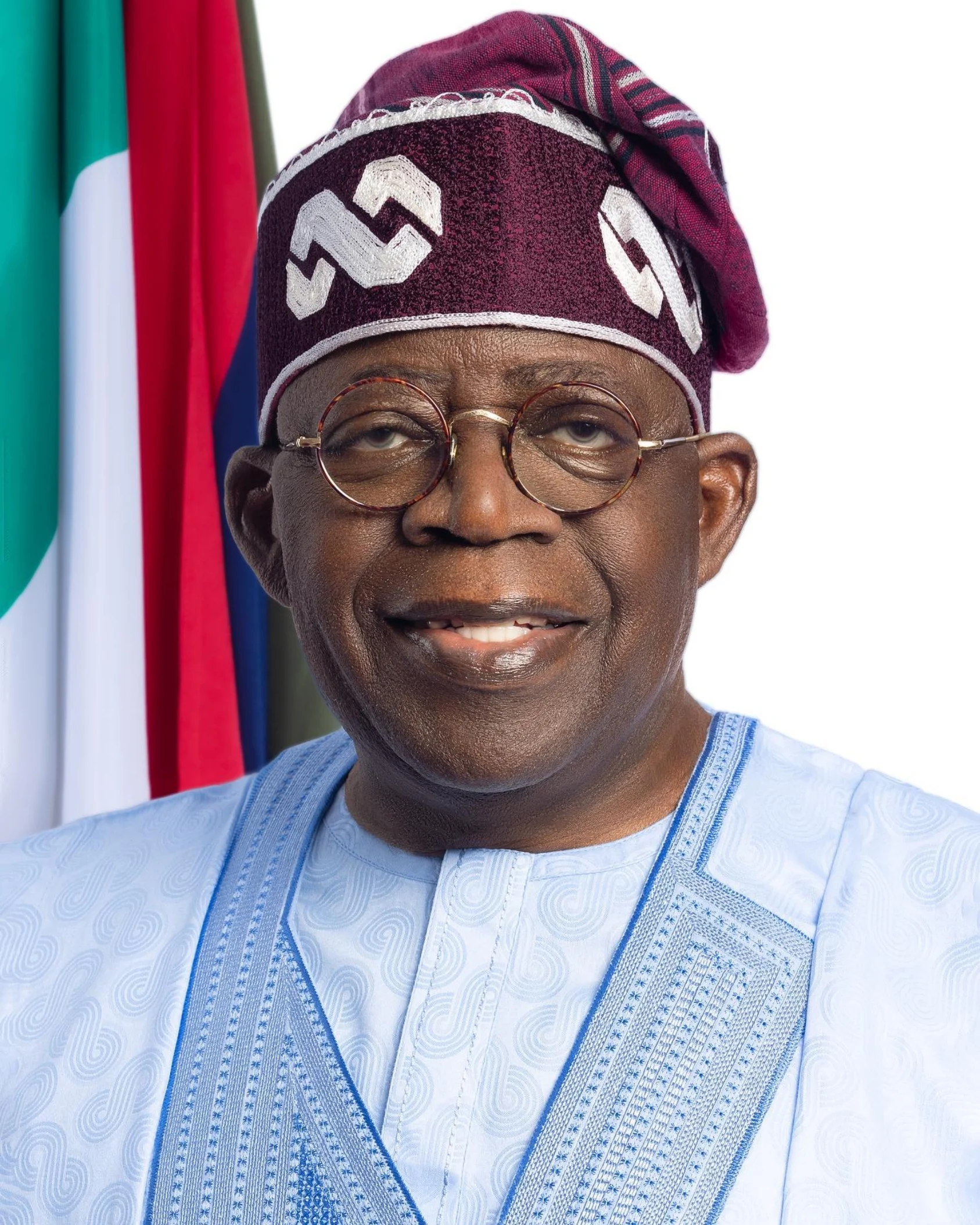
Atiku, the presidential candidate of the African Democratic Congress and former Vice-President, stepped up his campaign efforts in Sokoto. He promised to tackle insecurity and bring back fuel subsidy if elected in 2027.

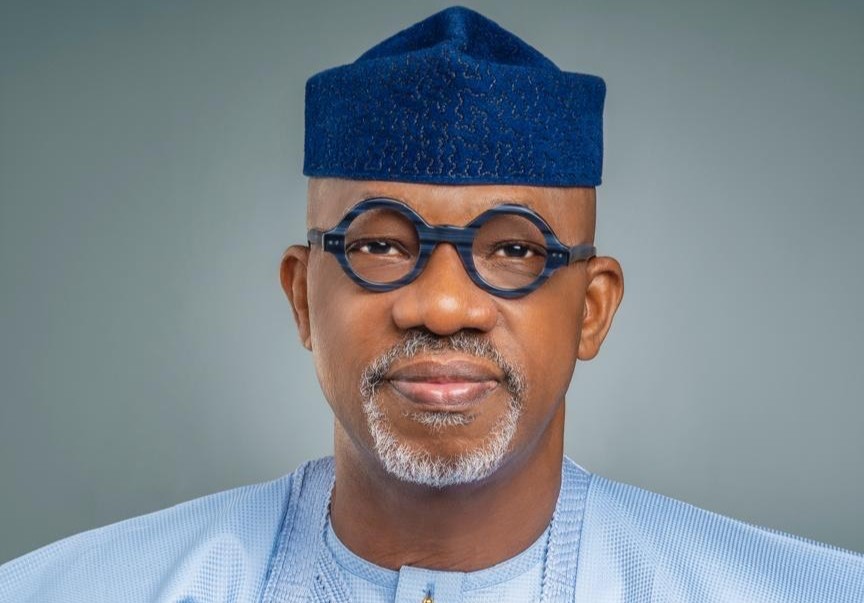
File photo: 2027 APM Presidential Candidate and Oyo State Governor, Seyi Makinde
In Abuja, Makinde revealed his Reset Nigeria manifesto, pledging to reduce the economic burden on Nigerians and improve their living conditions if he becomes president.
Peter Obi, representing the Nigeria Democratic Congress, also promised to promote national unity, address insecurity, and fight corruption if elected in the upcoming elections. He condemned political violence and shared concerns after an attack on his campaign convoy by suspected thugs in Calabar, Cross River State.
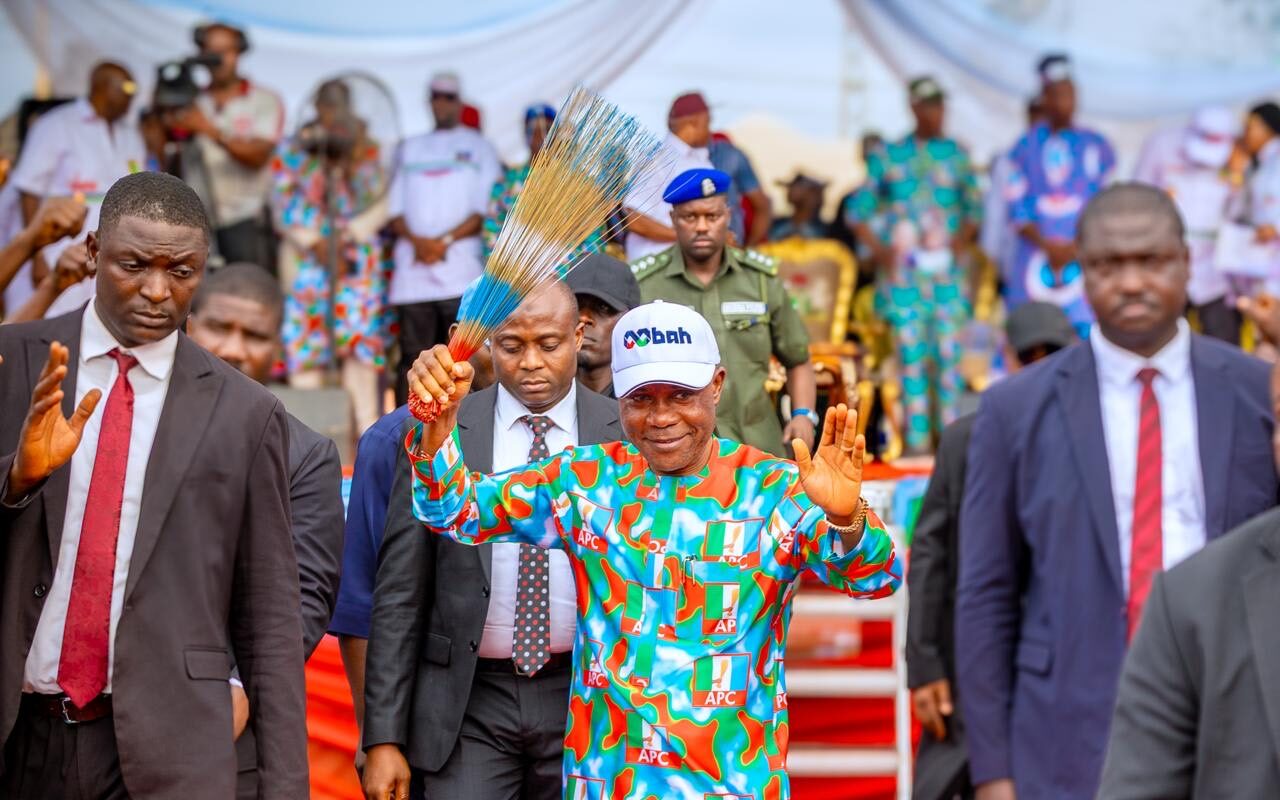
While Tinubu seeks re-election, Atiku, Makinde, and Obi, who are running under the ADC, APM, and NDC platforms, are major opponents in this race. Tinubu called on voters in Nasarawa State's 13 local government areas to support the All Progressives Congress candidates in the 2027 elections.
He made this appeal during a campaign rally in Lafia, the capital of Nasarawa State, using Vice-President Kashim Shettima to deliver his message. Tinubu stated that voting for APC candidates would ensure continuity of his administration’s Renewed Hope Agenda.
He mentioned achievements in road construction, healthcare facilities, and schools in Nasarawa State under his leadership. Tinubu asked residents to renew his mandate for another four years, promising more benefits if re-elected.
He said, "We want to assure you that, if God wills and we win the upcoming elections, we will ensure that we support you for maximum safety. We call on you to vote for all our party’s candidates. The biggest message from the leader of the country is: APC from top to bottom, APC from bottom to top."
Tinubu continued, "We do not want a situation where they say, vote for the President and not the governor, or vote for the governor and not the President, or the senator, or the House of Assembly. We want APC straight! APC straight! APC from top to bottom and bottom to top. May God give us peace and understanding. May God grant us peace of mind. We thank you very much."
He praised Nasarawa State Governor, Abdullahi Sule, for implementing projects aimed at improving the living conditions of residents. At the same time, the Chairman of the Progressive Governors Forum and Imo State Governor, Hope Uzodimma, emphasized the benefits of Tinubu’s economic policies, urging Nigerians to re-elect him.
Uzodimma said, "It is our decision to continue the deliberate trajectory of Nigeria through the architect of modern Nigeria, President Bola Ahmed Tinubu. We have come to Nasarawa State, and we have seen the developments. We have seen that, through the Renewed Hope Agenda, the hope of Nasarawa State has been renewed."
He added, "And we are here to affirm once more that Nigeria is in good hands. All of you should vote for President Bola Ahmed Tinubu. We have worked so hard. We have 31 governors. The party is a family. We plead for peace and harmony, and we pray for a peaceful Nigeria. Support our President, support our governorship candidate, and support Nigeria. May God bless all of us as we support the All Progressives Congress."
The APC National Chairman, Professor Nentawe Yilwatda; Speaker of the House of Representatives, Tajudeen Abbas; and Director-General of the party’s Presidential Campaign Council, Senator Abdulaziz Yari, expressed confidence that Nasarawa State would show strong support for the APC in the upcoming elections.
Earlier, Governor Sule welcomed the large turnout of APC supporters from Nasarawa and nearby North-Central states, assuring Tinubu that the campaign councils were dedicated to winning for all party candidates.
In related news, the APC Presidential Campaign Council announced that Tinubu's education reforms have led to N372.62bn in student loans and trained 156,446 beneficiaries in the Technical and Vocational Education and Training programme.
The council stated in a press release that these reforms have improved access to basic education, enhanced teacher welfare, and stabilized the academic calendar in higher institutions nationwide.
Despite these claims, the administration's education policies and reported successes have faced criticism from opposition parties as the January 16, 2027 election approaches. Some opposition figures have raised concerns about the reforms and their impact on Nigerians.
In response, the APC PCC stated that the government has introduced free technical education covering tuition, boarding, textbooks, and uniforms to boost vocational skills and expand job opportunities.
The statement noted, "President Bola Tinubu’s reforms in the education sector since assuming office have expanded access to learning, improved teachers’ welfare, and stabilized the academic calendar across higher institutions in the country."
According to the Federal Ministry of Education’s 2026 report, the government allocated N3.52tn to education in the 2026 budget and secured $552m for the HOPE-EDU programme, which targets 29 million children, over 500,000 teachers, and 65,000 public schools.
The APC PCC highlighted that the BESDA programme has returned over one million out-of-school children to classrooms and trained 1,400 Tsangaya teachers while establishing 200 bilingual centres in 17 northern states.
It stated that the AGILE programme has reached 7.19 million girls, with 3.7 million enrolled in secondary schools. More than 10,000 schools received facility upgrades.
Alake said that under Tinubu's administration, the revised national curriculum reintroduced Nigerian History and strengthened Civic and Heritage Studies. The National Learning Assessment has returned to monitor pupils’ performance and identify learning gaps.
The statement went on, "Under EduRevamp, 53,553 teachers have registered, while 51,794 joined the first cohort of the Accelerated Teacher Professionalisation Pathway, a six-month programme offering professional qualifications, certification, and licensing."
"Backed by N2bn, the programme targets 250,000 teachers by 2027. The Inspire Live initiative provides online lessons from Primary One to Senior Secondary School Three, supported by certified teachers and AI-assisted learning."
The APC PCC also mentioned that the TVET scheme attracted over 2.8 million applications, with 156,446 trainees receiving free training, monthly stipends, and start-up support. More than N65.7bn has been disbursed to trainees, and N30.2bn has been allocated to training centres.
The government has rehabilitated 38 technical colleges and introduced free technical education covering tuition, boarding, textbooks, and uniforms.
The APC PCC spokesperson also shared that the Federal Government is investing N110bn to rehabilitate 18 federal medical schools across the six geopolitical zones. Nursing enrolment increased from 81,480 in 2023 to 114,300 in 2025. The government has approved 20 STEM-focused tertiary institutions and earmarked 12 engineering and technology faculties for rehabilitation.
On student financing, the APC PCC noted, "NELFUND, a flagship programme of the Tinubu administration in the education sector, has processed 1,659,853 student loan applications and disbursed N372.62bn, covering N192.89bn for tuition and N179.73bn for upkeep allowances across 319 tertiary institutions."
The administration has also resolved the long-standing dispute with the Academic Staff Union of Universities and implemented an agreement for a 40 per cent increase in academic staff pay and improved benefits.
Additionally, the Tertiary Institutions Staff Support Fund has provided N28bn to 15,000 workers in 153 public institutions, offering loans up to N10m for housing, healthcare, transportation, and education.
The Federal Government has allocated N365m annually for research and innovation through the National Laureate Prize, while the Student Venture Capital Grant has disbursed over N2.5bn to 45 student entrepreneurs, with each beneficiary able to access up to N50m in funding.
The campaign council also noted that entrepreneurship certification is ongoing in 14 federal universities, while the Diaspora BRIDGE initiative has registered 1,141 Nigerian professionals abroad and reached 16,675 students in 107 tertiary institutions.
Atiku, while launching his campaign in Sokoto, promised to prioritize tackling insecurity, reviving the economy, and boosting regional trade, especially in Northern Nigeria. He said, "I will open all the land borders for our people to do legitimate business with our brothers across the border."
He added, "We will restore subsidy back into our fuel and do everything humanly possible to bring an end to insecurity so our people can return to their farms."
Atiku urged Nigerians to participate actively in the 2027 elections, vote for the ADC, and protect their votes from manipulation. He vowed that the party would resist any attempt to repeat past electoral irregularities.
Atiku said, "We should all come out, vote massively, protect our votes, and ensure they are counted and announced. We will not allow what happened in the last elections to happen anymore."
He also spoke on the historical significance of Sokoto as a major center of influence in Northern Nigeria. He praised the state party chapter for organizing the campaign launch but alleged that the ruling party attempted to disrupt the event.
ADC National Chairman, Senator David Mark, noted that the large crowd at the rally showed that Sokoto residents are ready for political change. He mentioned their journey from the airport to the rally venue, which took over three hours despite covering less than 10 kilometers, as proof of the party's support in the area.
Mark described the Atiku-Amaechi ticket as the leadership needed to tackle Nigeria’s security and economic problems. The ADC stated Atiku’s motorcade took three and a half hours to go from Sultan Muhammad III International Airport to the party secretariat, with thousands of residents welcoming the former Vice-President along the way.
The party claimed that the crowd included men, women, youths, and elders who paused their daily activities to join the rally. ADC's Director of Strategic Communication, Phrank Shaibu, said the turnout reflected Nigerians’ frustration with rising food, transportation, and fuel costs.
Shaibu emphasized, "This was not a crowd assembled by inducement. It was a spontaneous turnout by Nigerians who are struggling with the cost of food, transport, fuel, and other basic necessities."
The party also accused the Sokoto State Government of denying it access to public facilities for the campaign launch, claiming the authorities placed obstacles in their way. They argued these restrictions failed to stop supporters, showing the people's determination to express their political choices freely.
They stated, "Denying people a venue cannot suppress their political choices. In Sokoto, those efforts backfired: the people came out in even greater numbers and made their voices heard."
At the rally, Atiku reiterated his pledge to address the rising cost of living, while the ADC highlighted a proposed subsidy for locally refined petroleum products as part of his economic plan.
The party explained that this policy would link government support to domestic refining, aiming to lower fuel prices and reduce transportation and energy costs for households and businesses.
Shaibu said, "By tying support to domestic production, the policy will help bring down fuel costs and ease the pressure high transport and energy prices place on food prices and family budgets. The ADC's agenda focuses on affordability, local production, and a government responsive to the daily challenges facing Nigerians."
Makinde also launched his Reset Agenda manifesto on Wednesday, pledging reforms in the economy, education, security, and the socio-political system to improve living conditions for Nigerians.
Speaking at Transcorp Hilton, Abuja, during the manifesto presentation, Makinde said his presidential ambition is driven by the need to solve the country's challenges and restore the vision of its founders. He is the second presidential candidate to unveil a manifesto ahead of the election, following the Social Democratic Party candidate.
Makinde stressed that the government must move beyond promises to deliver real results. He said, "Concrete promises alone are not enough. Every promise must be linked to a responsible institution, a delivery plan, and measurable results that citizens can verify."
He added, "My simple proposition is that government must make life easier for the people. We must develop people’s abilities and expand their access to opportunities. We must also have institutions that work."
Makinde identified four major concerns that influenced his decision to run for president, which form the core of the Reset Agenda. He emphasized the need for macroeconomic reforms that lead to real improvements in people’s lives.
He stated, "What does macroeconomic stability mean if it does not improve the living conditions of ordinary Nigerians? Macroeconomic stability must have a direct impact on the people through job creation, improved incomes, and a lower cost of living. These are issues we cannot shy away from."
The Oyo State governor emphasized accountability and the need for the government to take responsibility for its performance. He lamented that poor leadership has hindered Nigeria’s development despite its abundant resources.
Makinde promised to strengthen national institutions to promote unity and ensure that political affiliations do not hinder national progress or efforts to improve citizens’ welfare.
He said, "Yes, there has been a lot of political debate about the petroleum subsidy, but under our Reset Agenda, we have a clear pathway to deliver value to Nigerians."
He questioned Nigeria’s budget system, asking, "What happens when crude oil rises to $100 per barrel? Must Nigerians continue to pay through their noses, or should we have a system where the government establishes a benchmark and returns the additional value to the Nigerian people?"
Makinde assured, "Our administration will be measurable, and within three years, beginning with the first 100 days, we will establish clear targets against which our performance will be assessed. All of us must be held accountable."
He urged Nigerians to hold the Federal Government accountable for its promises, especially regarding reliable electricity. Makinde recalled the government’s vow that Nigerians should not re-elect it if it failed to fix the power sector.
He criticized the government for shifting responsibility to state governments under the electricity autonomy law, insisting that the Federal Government must be accountable for challenges in national power generation and distribution.
On Nigeria’s political system, Makinde pointed out that previous administrations have tried different arrangements to tackle the country's issues.
He said, "We started with the parliamentary system, then moved to the presidential system, and later experimented with a modified presidential system during General Ibrahim Babangida’s regime."
Makinde believes that Nigeria’s diversity should be a source of strength and unity, not division. He argued that the presidential system works best with a two-party structure but acknowledged that the current multi-party system provides opportunities for independent political ambitions.
He proposed a transitional government of national unity under the Reset Agenda, emphasizing it would not serve personal interests. He stated, "I will not seek any position under whatever constitutional and political arrangements may emerge."
Makinde added, "To become President of Nigeria, a candidate must secure at least 51 per cent of the vote. This way, candidates will have to engage across party lines to form a government that respects the majority of Nigerians."
His running mate, Lawal Musa Daura, condemned the alleged suppression of opposition parties, warning that denying political opponents a fair chance threatens democracy.
Daura stated, "Governments suppress opposition by refusing a level playing field, failing to respect the rules, and denying people the chance to participate in democracy. When this happens, the entire population is threatened."
He stressed that a strong opposition is vital for democracy, stating it complements the government rather than opposing it and helps to lower political tensions.
Daura promised that their proposed transitional government would hold a national conference with all societal segments to discuss the country's challenges and agree on a common direction.
He identified education, the economy, security, and the socio-political system as the four pillars of the Reset Agenda, vowing to prioritize national interests over personal gains.
The National Chairman of the Social Democratic Party, Professor Sadiq Gombe, praised Makinde as the opposition's shining star and confirmed ongoing talks among political parties to unite.
He expressed optimism about these efforts, highlighting Makinde’s role in fostering unity among opposition parties.
Gombe stated, "Today, Governor Seyi Makinde is a shining light of the opposition. He won the election under the PDP despite all odds, while other states were controlled by APC."
He added, "Governor Makinde and my brother, Governor Bala Mohammed of Bauchi State, have reignited the aspirations of our democracy. When others left the room, they stood firm to support democracy in Nigeria today."
Meanwhile, Peter Obi, the NDC presidential candidate, stated his administration would focus on national unity, security, education, healthcare, and citizens’ welfare.
During a town hall meeting with party members in Calabar, Obi emphasized that uniting Nigeria is crucial to tackling insecurity and other challenges.
He said, "Nigeria is currently divided. We will work to unite this country because uniting the nation would provide the strength needed to confront insecurity and other national challenges."
Obi vowed to take a tough stance against kidnapping and attacks on schoolchildren, promising to pursue abductors relentlessly. He declared, "We are not scared of him."
On corruption, he pledged to combat it decisively, insisting public funds must serve the people. Obi said, "We will fight corruption head-on. Public money must be used for the public good and the welfare of the people."
He also promised to boost investment in education and healthcare, labeling both sectors as essential to national development. Obi emphasized his political partnership as a new approach to governance, based on shared responsibility and commitment to transforming the country.



Comments
No comments yet.