Groups threaten to protest over Lagos government's borehole crackdown
Civil society groups in Lagos threaten protests if the government enforces borehole regulations. They argue residents need boreholes due to inadequate public water supply.
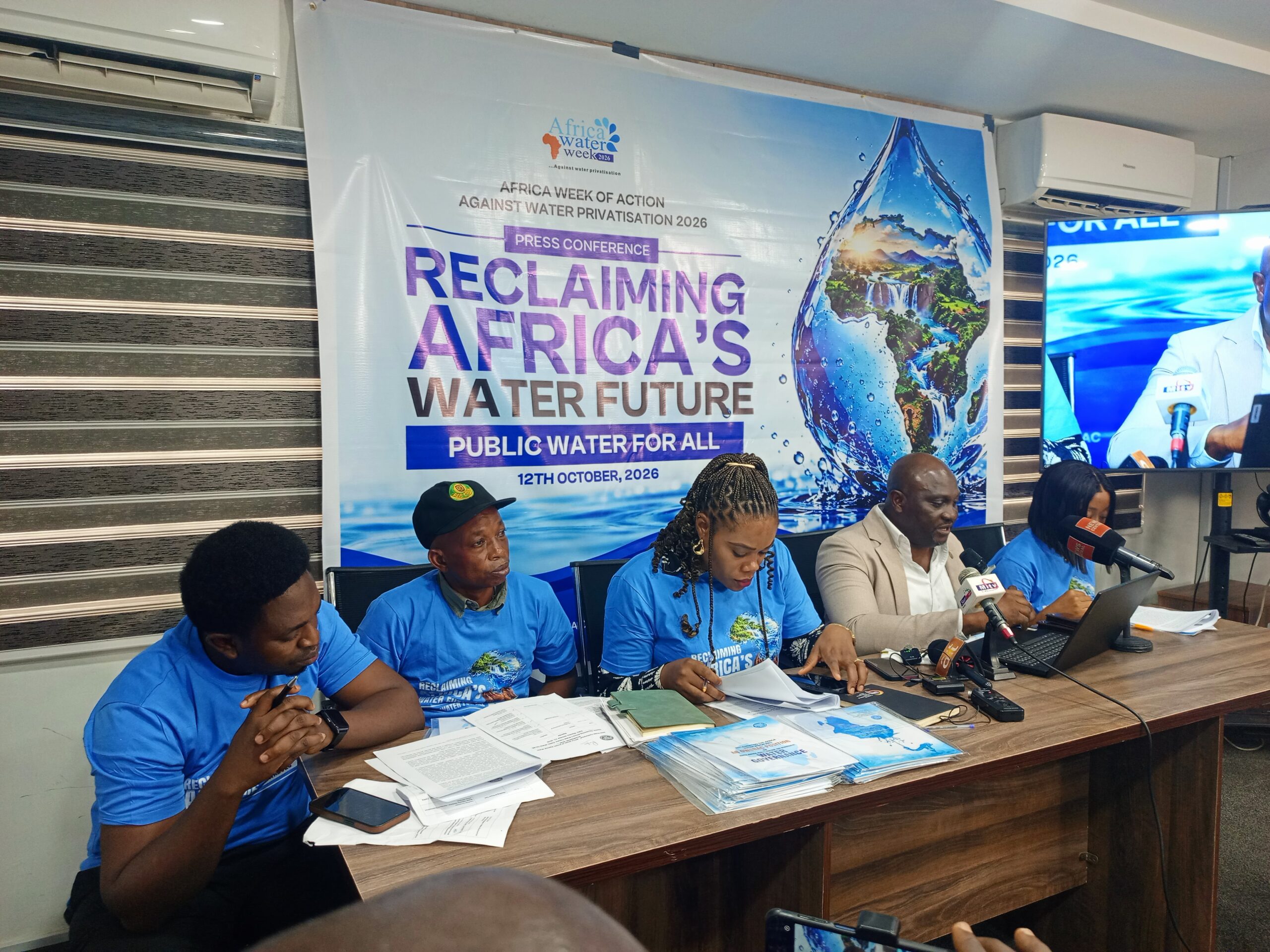
A group of civil society organisations, community groups, and trade unions has threatened to take action across Lagos if the state government tries to seal private boreholes or punish residents for drawing groundwater without permission.
The groups, known as the Our Water Our Right Africa Coalition (OWORAC), say residents have no choice but to rely on boreholes because the government has not provided enough public water supply.
In a statement on Wednesday, the coalition urged the Lagos State Water Regulatory Commission (LASWARCO) to clarify its stance on home boreholes after it warned that unapproved drilling and groundwater extraction could lead to sealing of facilities and legal action against operators.
PREMIUM TIMES reported that LASWARCO’s Executive Secretary, Oluwabukola Adeyemo, said anyone wanting to drill a borehole or extract groundwater must first get the right permits.
Ms Adeyemo explained that taking groundwater without permission is illegal under the Lagos State Environmental Management and Protection Law 2017. She also asked residents and community leaders to report any unauthorized drilling and extraction through a dedicated hotline.
But the coalition argued that the law does not require permits for boreholes used for home needs.
They mentioned Section 253(1), which allows residents to build or extend wells and boreholes in their homes without a license if these are for household water. They also pointed to Section 259(2), which says permits are needed for boreholes used for other reasons.
The groups accused LASWARCO of causing unnecessary fear by enforcing rules without explaining the exemptions in the law.
They claimed that the planned crackdown was unfair since the state’s public water network has limited coverage.
Using figures from the Lagos Water Corporation, the coalition said there are 34,424 registered connections, which is only about 1.03 percent of direct coverage in a state with over 20 million people.
Even though the corporation says these connections serve multiple households, the groups argue that only about 8.3 percent of residents have access to this network, leaving most people relying on other sources.
They blamed the government for the poor condition of major waterworks in Iju, Adiyan, and Ishashi, saying residents must find their own water.
The coalition also criticized Section 252 of the 2017 law, claiming it protects the Lagos Water Corporation from being held responsible for damages caused by interruptions in public water supply.
“A government that actively absolves itself of the constitutional duty to deliver water cannot legitimately turn around to criminalise and extort citizens who were forced to become their own mini-water authorities and service providers,” the groups said.
They noted that the situation is worse in areas where groundwater has been polluted.
According to the coalition, residents of Baruwa, Iludun, and Ajegunle are facing contamination linked to oil pipelines. Communities along the Lekki coastal area are dealing with sewage pollution and saltwater intrusion.
The coalition said people in these areas must spend a lot of money on water from private vendors.
The groups also accused LASWARCO of treating large water users better than regular residents.
They recalled that the commission worked with big companies like Nigerian Bottling Company, Guinness Nigeria, and FrieslandCampina WAMCO on regulatory compliance in 2024.
The coalition claimed LASWARCO spent over seven years discussing compliance with some companies despite ongoing issues.
They questioned why the commission would allow years of talks with large companies while threatening households that depend on boreholes for daily water.
They further claimed that the proposed enforcement could damage community-managed water supply systems and push residents towards private water services and prepaid metering.
The coalition called on the state government to drop plans to privatize the Lagos Water Corporation. They want the government to improve existing waterworks, expand public water supply, and strengthen action against large-scale commercial groundwater extraction and pollution.
They also asked for changes in how the corporation is managed to involve workers, communities, trade unions, and civil society groups more.
The groups urged LASWARCO to confirm that domestic boreholes and wells do not need permits and assure residents that their properties will not be sealed for using water for home needs.
They called on community development associations, youth groups, labor unions, artisans, and market women across the state to stand against any attempt to shut down home boreholes.
The coalition warned that if LASWARCO or government task forces try to enter residential areas, demand permits, or seal domestic boreholes, they would face legal action and organized resistance.
The statement was signed by 25 representatives from civil society organizations, trade unions, and community groups. This includes Adewale Ojo, chairman of the Lagos State chapter of the Committee for the Defence of Human Rights; Zikora Ibeh from Corporate Accountability and Public Participation Africa; Okechukwu Nwanguma of the Rule of Law and Accountability Advocacy Centre; and Gbenga Komolafe of the Federation of Informal Workers Organisation of Nigeria.
Comments
No comments yet.