Paying Tribute to Chief C.O. Adebayo: Remembering a Great Leader One Year Later
Chief Cornelius Olatunji Adebayo was a prominent leader who left a lasting impact. We honor his memory and contributions one year after his passing.
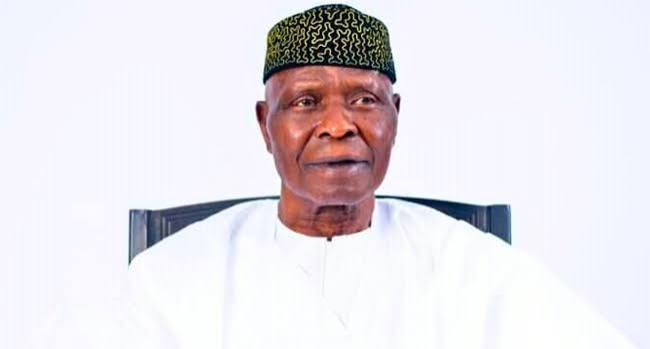
Some people leave strong memories and marks on our lives. The late Chief Cornelius Olatunji Adebayo was one of those people. He was a former university lecturer, governor of Kwara State during the Second Republic, Senator, and minister of communications and later transportation. He was a key figure in the National Democratic Coalition (NADECO) and a strong voice for Afenifere, the Middle Belt Forum, and the Movement for National Reformation (MNR). He lived a life full of purpose, defined by integrity, humility, and commitment to high ideals. He carried himself with grace and confidence. One year after his passing, we remember him as an elder statesman who impacted many lives.
If you were a journalist covering politics in the early 1990s, you might have met Chief C.O. Adebayo. I first met him 34 years ago at his home in Ilorin GRA. I went to interview him for Classique magazine. I felt excited to meet him. His handshake was firm, and he was warm. His smile was contagious. He openly shared his progressive views during our talk. He spoke clearly and confidently, making me feel comfortable. He was a great communicator and a treasure of knowledge. What began as a journalistic meeting grew into a lasting friendship until his passing last year. I have many fond memories of him. He had great speaking skills, always making his points clear and engaging. He was down to earth and welcoming. Whenever you visited him, he would always see you off with a friendly handshake.
I still remember the last time I saw him in 2021, four years before he passed away. I visited him in Abuja after hearing he was unwell. That afternoon, I found him with one of his daughters. He was straightforward, attentive, and cheerful. As we talked, I recalled the years when he was very active in politics. We spent hours reminiscing about political events and the state of the nation. He expressed delight at seeing my name among those nominated by then-President Muhammadu Buhari as Ambassadors-designate. He promised to visit me in Bangkok, Thailand. Even then, I suspected he might not make that trip due to his age. He was a visionary who dedicated himself to several organizations, including NADECO, MNR, Afenifere, and the Middle Belt Forum.
Chief Adebayo was a thought leader and a calming figure during tough times. He played a vital role in NADECO’s fight for late Chief M.K.O. Abiola’s electoral mandate. He was also key in Afenifere, the Middle Belt Forum, and the MNR. He was a true hero, a voice of reason and courage, and represented high integrity, moral strength, and compassion. His depth of thought and unique storytelling made him stand out. Throughout our friendship since the early 1990s, he showed great wisdom, logic, and character.
Chief C.O. Adebayo’s views were always relevant, especially his strong opposition to military rule and his call for Nigeria to be restructured. His friendly nature and willingness to advise younger professionals like me brought us closer. This relationship lasted over thirty years. He was a go-to person for news about the defunct Social Democratic Party (SDP). Because of our closeness, he even wrote me a letter from Calabar prison, where late General Sani Abacha held him in 1994 for his role in NADECO. That letter was more than just a personal account. C.O. Adebayo even turned down a ministerial position from Abacha's regime. As a journalist, C.O. Adebayo encouraged me to be one of the media voices for democracy. He was a well-known progressive who helped me in my early journalism career. His media-friendly nature during the tough times of the Babangida and Abacha regimes was invaluable for those of us looking to uncover the truth. Chief Adebayo was very approachable, and his deep thoughts and sharp wit drew many to him. His home in Lagos became a space for political discussions.
Today, we remember him as a statesman who influenced many lives. He was friendly, quick-witted, and intelligent. He was an Iroko tree whose strong commitment, courage, and intellect inspired many. He was straightforward, practical, and bold. His influence covered politics, leadership, public service, community service, the Middle Belt Forum, the Yoruba nation, and states like Kwara and Kogi. His achievements were impressive. He was a scholar, a young Senator, and a governor. He served as Minister of Transportation and Communications at different times. He was also a lecturer at the University of Ife and headed the English Department at Kwara State College of Technology. His record shows he was one of Nigeria’s most significant statesmen and reformers who stood with the people during the harsh years of military rule.
His voice on national issues was clear. He often called for Nigeria’s restructuring. In a 2016 interview, he said, "There are nations, and I am talking about the conventional sense of the word nation, in the sense that Yorubaland is a nation. There are smaller ones, and there are bigger ones. Who wants to be together? My people in Kwara want to be part of the Yoruba nation within a federation. And so long as they have such desires, they must be addressed. And if they are not addressed, the people are not happy. They are not getting what they believe they need to stay happy within the federation…Power is too heavy in the hands of the Federal Government in Nigeria. There must be devolution. Before devolution, there must be restructuring to stem the oppression of minorities within a unit. My position remains what you’ll expect it to be."
He added: "With all modesty, I was one of the leaders of the Middle Belt Forum, and I remain one of the leaders of the forum. I was at one point chairman of the political forum of Afenifere; I remain a very strong believer in Afenifere and of course, the Yoruba nation. I believe Kwara wants and deserves the best share of whatever this country has to offer. So, beginning at home, we were talking restructuring.…I was secretary of the National Reformation Movement. And what the NADECO was about is restructuring of Nigeria…"
He was a true leader, an iconic statesman whose actions and reputation went beyond many areas. He faced challenges with strength and grace. Born on February 24, 1941, in Igbaja, now in Kwara State, Adebayo attended Oke-Onigbin Provincial Secondary School and then Barewa College. He graduated from Ahmadu Bello University in 1967 and later studied at the University of Ghana, Legon, for his Master’s degree. He had a remarkable career spanning academics, governance, parliament, community service, and the pro-democracy movement.
Chief C.O. Adebayo was a giant, a leader, and a bright star from Oke-Onigbin in Kwara State who shone brightly for 84 years. His achievements and lasting influence are a legacy for future generations. One year on, as we remember the great Chief C.O. Adebayo, I find comfort in the poem by Clare Harner, written in 1934, titled "Do Not Stand at My Grave and Weep":
"Do not stand at my grave and weep. I am not there. I do not sleep. I am a thousand winds that blow. I am the diamond glints on snow. I am the sunlight on ripened grain. I am the gentle autumn rain when you awaken in the morning hush. I am the swift uplifting rush of quiet birds in circled flight. I am the soft stars that shine at Night. Do not stand at my grave and cry. I am not there. I did not die."
In the beauty of our skies and oceans, and in the warmth of our weather, we remember C.O. Adebayo as a patriot and a dedicated leader. He was committed to Nigeria's restructuring, democracy, the rule of law, and a nation that respects its people's diversity. His remarkable achievements will guide us in a time when dedication to noble ideals is fading.
Comments
No comments yet.