Sultan Sa’ad Abubakar III: A Journey of Twenty Years on the Throne
Sultan Sa'ad Abubakar III celebrates twenty years as Sultan of Sokoto. His reign is significant in the history of the Sultanate.
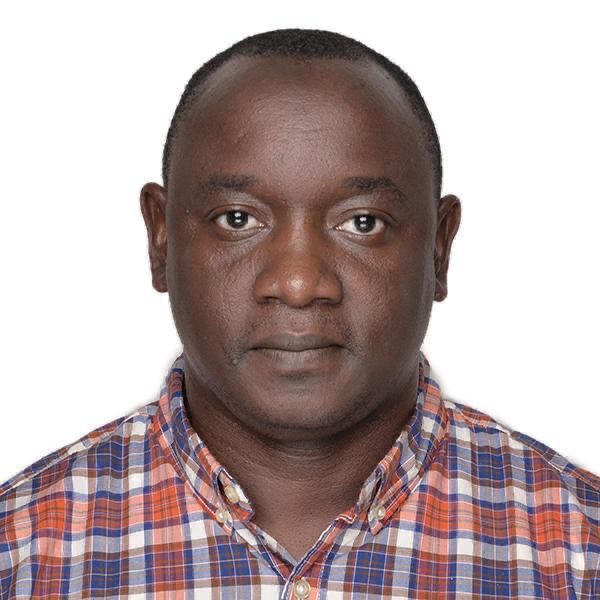

The Sultan of Sokoto, Abubakar Sa’ad III
Today, 2 November 2026, Sultan Sa’ad marks exactly twenty years on the throne. He is the Sultan with the longest reign in this century and, based on common understanding of reign dates, ranks third in length of reign in the history of the Sultanate. During 2027, he is expected to surpass Sultan Muhammadu Bello and move into second place, behind only his father.
Sultan Muhammadu Sa’ad Abubakar III was born on Friday, 24 August 1956, to Sultan Siddiq Abubakar III and Hajiya Fadimatu Binta Abubakar. At the time, neither his father nor his mother knew what destiny held for him. They could not have imagined that he would become a military officer and return years later as the twentieth Sultan of Sokoto. As he celebrates twenty years on the throne, we see how his journey unfolded. The throne was not the obvious destination during his childhood. That knowledge belonged to Allah alone.
If anyone in the family seemed closer to the throne, it was Sultan Sa’ad’s older brother, Sultan Muhammadu Maccido. He was 30 when Sultan Sa’ad Abubakar III was born. Sultan Maccido served as their father’s aide and was among the main contenders when Sultan Abubakar III passed away in 1988. Destiny took a turn with Sultan Ibrahim Dasuki's emergence. Eight years later, Sultan Maccido became Sultan. He ruled for ten years before dying in the ADC Airlines Flight 53 crash on 29 October 2006, along with his son, Senator Badamasi Maccido.
Sultan Sa’ad’s mother saw him ascend to the throne, something his father and brother never experienced. Hadijatu Kubbura passed away months before Sultan Abubakar III became Sultan in 1938, and Sultan Maccido’s mother, Hauwa, died before his accession in 1996. Sultan Abubakar III was 35 when his uncle and guardian, Sultan Hassan Dan Mu’azu, died on 31 May 1938. He was grieving for both his mother and uncle, who had raised him and prayed for his success when he became the seventeenth Sultan on 17 June 1938.
Sultan Sa’ad did not follow the usual path of palace titles, but he was familiar with the Sultanate. He watched how his father ran its affairs and traveled with him to places like Maiduguri and Kaduna. He learned from his father’s engagement with governments, traditional rulers, and various communities. His training began by his father’s side and continued through national service.
His entry into the Army was not expected. After doing well in his West African School Certificate examination, he seemed set for further study. He had not planned to join the military, as he was not part of Barewa College’s Student Cadet Force. His plans changed when General TY Danjuma visited Sokoto and encouraged Sultan Abubakar III to support educated northern youths joining the Army after the Civil War. Responding to this, Sultan Abubakar III ensured that seven eligible young men from his household applied to the Nigerian Defence Academy (NDA). All took the entrance exam, three reached interviews, but only Sultan Sa’ad passed.
He entered the NDA on 30 June 1975 as part of the 18th Regular Combatant Course and became a second lieutenant on 17 December 1977. He was posted to the Armoured Corps and held various positions, including serving in Chad and Sierra Leone. He rose to the rank of brigadier general and became Nigeria’s Defence Adviser to Pakistan. The prince who left Sokoto returned as a commander, peacekeeper, and diplomat.
After Sultan Maccido’s death, Sultan Sa’ad rushed from Jos to Sokoto to join the royal family in mourning. There was no public sign he was returning to seek the throne. Other contenders included older traditional titleholders and public servants from prominent branches of the ruling family. His military career kept him out of the traditional hierarchy, making his selection surprising. On Thursday, 2 November 2006, the grieving younger brother was announced as Sultan.
He was officially installed and presented with the staff of office on Saturday, 3 March 2007. The ceremony attracted President Olusegun Obasanjo and traditional rulers from all over Nigeria. Sultan Sa’ad renewed his promise to promote equity, fairness, and justice, moving from military command to moral leadership based on credibility, restraint, and persuasion.
When Sultan Sa’ad became Sultan, several respected monarchs who had interacted with Sultan Abubakar III were still in power. These included Emir Ado Bayero of Kano and Emir Shehu Idris of Zazzau. Sultan Sa’ad engaged with them while their memories of his father provided a link between both reigns. Emir Ado Bayero and Shehu Mustapha were among those who attended his formal installation in 2007.
Two decades later, Sultan Sa’ad now occupies the senior position once held by those older rulers. Rulers who came to their thrones after him include Emir Umar Faruq Umar of Daura and Emir Abdulmumini Kabir Usman of Katsina. Sultan Sa’ad has become a senior reference point among them, offering experience and guidance. The prince who sat among rulers who knew his father now leads a younger generation of monarchs.
What seemed unplanned was preparation by another route. Sultan Sa’ad brought a philosophy of leadership into a new age. During the upheavals of 1966, Sultan Abubakar III moved between Kaduna and Lagos, consulting leaders and helping to calm the country while mourning his kinsman and adviser, Sir Ahmadu Bello. He condemned violence and discouraged revenge. In his broadcast of 17 June 1966, he reassured scared communities, urged people not to leave the North, and invited those who fled to return. He used his moral authority to promote peace and unity.
Sultan Abubakar III also showed openness to religious differences. Alhaji Shehu Malami wrote about this in "Sir Siddiq Abubakar III, 17th Sultan of Sokoto." He highlighted how Sultan Abubakar III paid for Bibles when Christian boys began attending the Sokoto Native Authority School. This reflected his willingness to meet the religious needs of Christians under his authority.
His openness extended across ethnic lines. In "Indigeneity, Ethnicity and Federalism," Daniel C. Bach tells the story of Alhaji Mamman Dike, an Igbo man born in Asaba. He first brought a motorcar to the Native Authority workshop during Sultan Muhammadu Maiturare's reign, from 1915 to 1924. Dike worked in palace service and became Sultan Abubakar III’s trusted servant. He married two Hausa women, had eleven children, and stayed in Sokoto during the Civil War, passing away there on 22 May 1990. His life showed how trust and loyalty could go beyond ethnic origin.
This tradition continued with Sultan Muhammadu Maccido, who was friends with Chief Joe Ifedobi, the Okosisi of Akpo. Reports say Chief Ifedobi drove him to the airport before his appointment was announced in 1996. Their friendship lasted until Sultan Maccido’s death in 2006.
Sultan Sa’ad carries this legacy into a different age. His father taught that faith, education, productive work, justice, security, and social welfare were all connected. Sultan Sa’ad has applied those lessons in democratic Nigeria, working with Muslim and Christian leaders, governments, and communities across ethnic and regional boundaries, even without executive power.
His twenty years have seen the administrations of Presidents Olusegun Obasanjo, Umaru Musa Yar’Adua, Goodluck Jonathan, Muhammadu Buhari, and Bola Ahmed Tinubu. While Sultan Abubakar III preserved the Sultanate through colonial rule and independence, Sultan Sa’ad has maintained its moral authority through terrorism, banditry, and political division. Like his father in the 1960s, he has been present in Nigeria’s toughest national discussions.
He has often condemned Boko Haram, banditry, and violence done in the name of religion. Following the murder of Deborah Samuel in Sokoto in May 2022, the Sultanate Council condemned the act as wrong and insisted that the culprits face justice. The message was clear. No accusation allows a mob to take the law into their own hands. Every grievance must go through the law, regardless of the religion of the accused or the victim.
I have followed Sultan Sa’ad for nearly two decades. I started covering him as a journalist in 2007 at meetings of the Northern Governors’ Forum and the Northern Traditional Rulers Council. I also reported his interviews with BBC and VOA, especially on security. Our paths crossed again in 2015 and continued throughout my time in the Kaduna State Government. These interactions showed his consistent concern for peace, security, religious harmony, and national unity.
His peace campaign has also gone beyond Nigeria. I was with Sultan Sa’ad at the 2022 International Ministerial Conference on Freedom of Religion or Belief in London, where he joined other leaders to promote religious tolerance. As President General of the Nigerian Supreme Council for Islamic Affairs, he has worked with successive leaders of the Christian Association of Nigeria. The military officer now influences through dialogue, restraint, and persuasion.
The anniversary has a unique historical significance. Sultan Abubakar III’s reign of over fifty years is the longest in Sokoto’s history. Sultan Muhammadu Bello ruled for about twenty and a half years in the nineteenth century. Today, 2 November 2026, Sultan Sa’ad marks exactly twenty years on the throne. He is the Sultan with the longest reign in this century and, based on common reign dates, ranks third in length of reign in the history of the Sultanate. In 2027, he is expected to surpass Sultan Muhammadu Bello and take second place, behind only his father.
After twenty years on the throne, Sultan Sa’ad is at the crossroads of palace and barracks, mosque and interfaith discussions, inherited authority and democratic citizenship. Events he did not plan shaped his life. His father’s response to General Danjuma’s call led him to the Army. Military service prepared him for unexpected duties. His brother’s death brought him back home to grieve, only for the kingmakers to choose him as Sultan.
The child whose future only Allah knew served at home and abroad before returning to carry on a legacy in a democratic age. What seemed unplanned was destiny unfolding at its right time.
Allah Ya ja zamanin Amirul Muminin!
Comments
No comments yet.